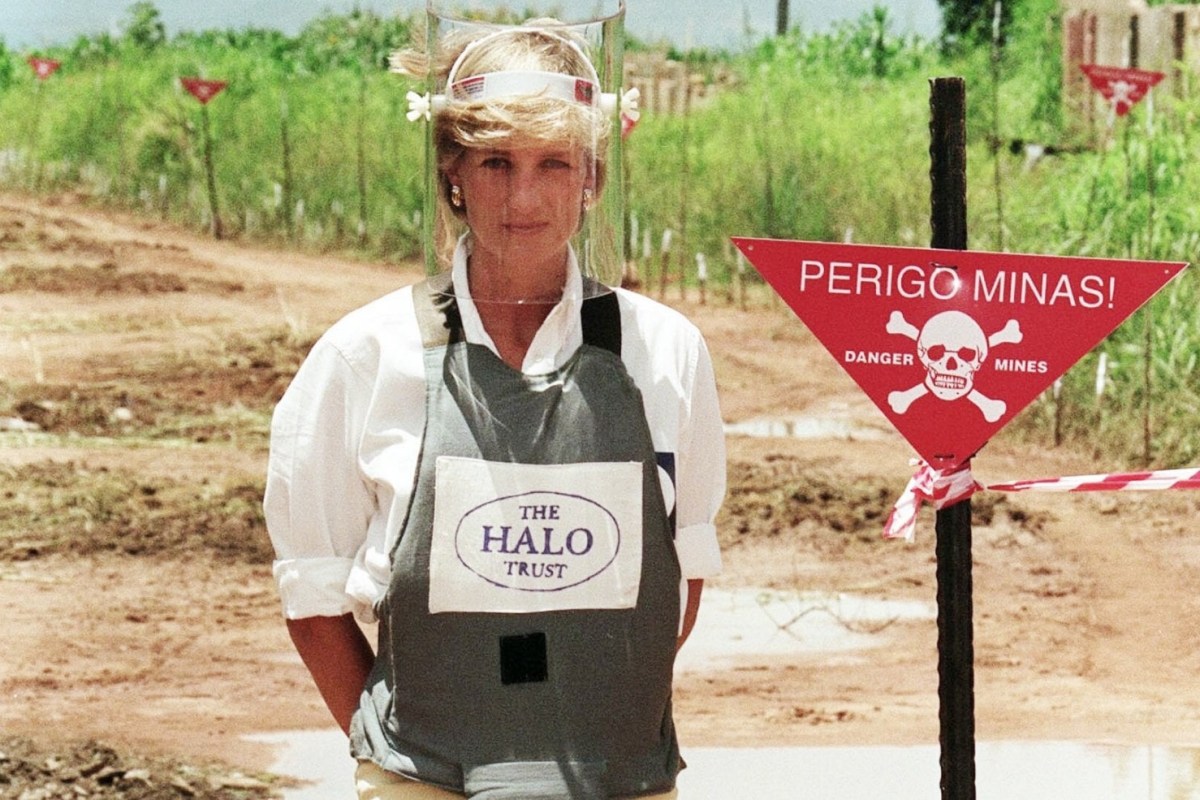
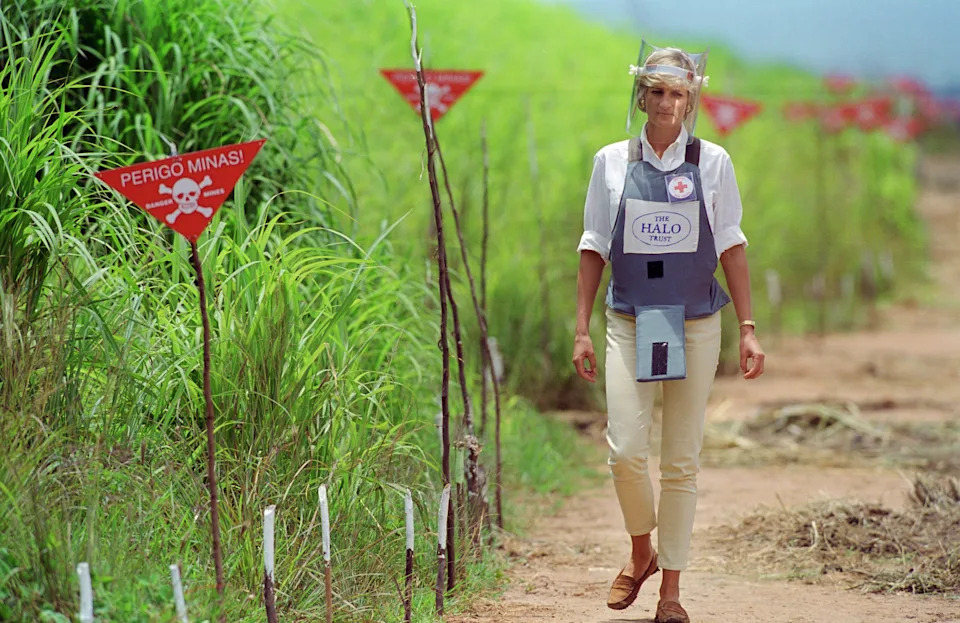
On Jan 15, 1997, Princess Diana walked across a minefield in Huambo in central Angola. The photographs soon raise international attention on the landmine issue. Angola was still at a civil war when she arrived in 1997, the Princess came across the HALO Trust, which had been working to clear mines in Angola since 1994. It is reported that about 100,000 landmines have been removed from the area over the years.
She met landmine survivors, followed the experts and staff walk through the mine-cleared road, and vocally appealed for an international ban on landmines. As one of the most recognized people in the world, the images of Princess Diana wearing protective clothing and equipment in a minefield were immediately published on the front pages of the global media, raising the profile of the work being done to clear landmines worldwide.
It grieves me to say, Diana passed away due to a car accident and was unable to witness the Ottawa Treaty signed in Canada a few months later, which prohibits the use, stockpiling, production, transfer of landmines, and 164 countries have so far joined the agreement. The International Anti-Landmine Organization won the Nobel Peace Prize in 1997, and it is not without Diana’s credit for it.
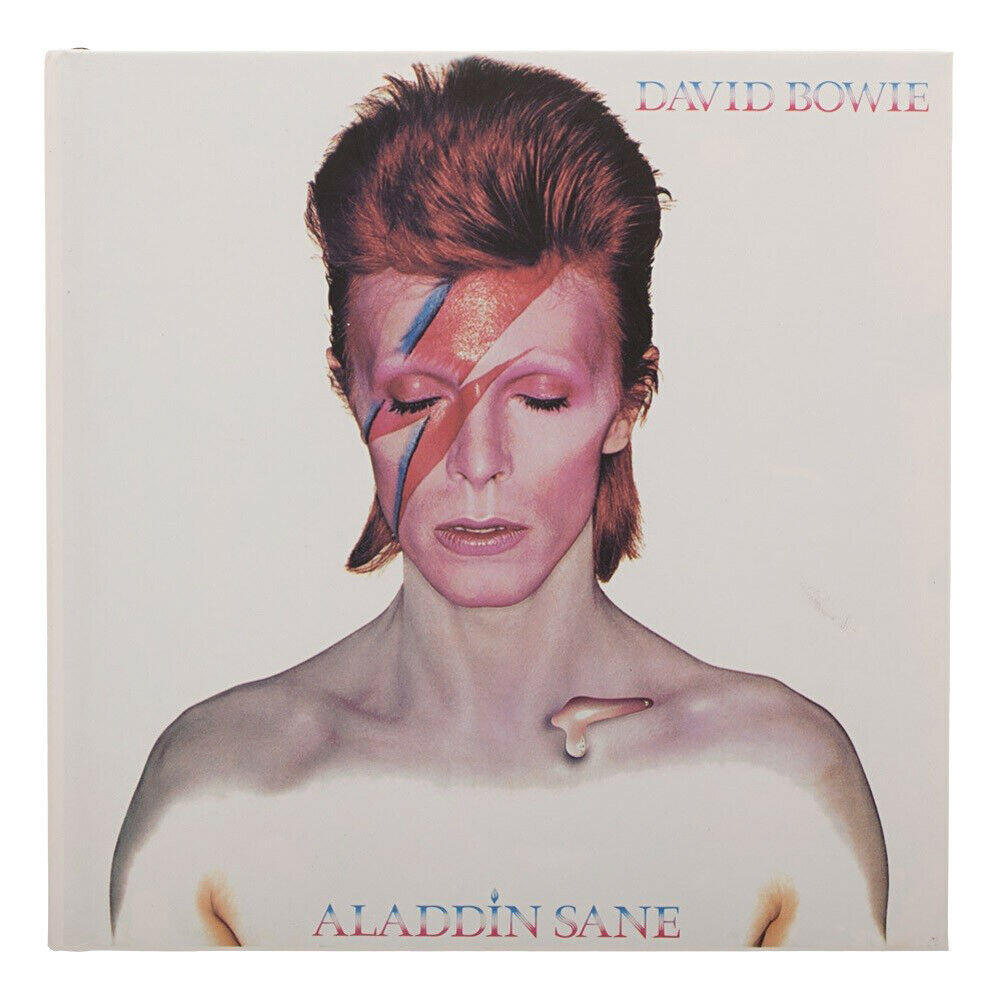
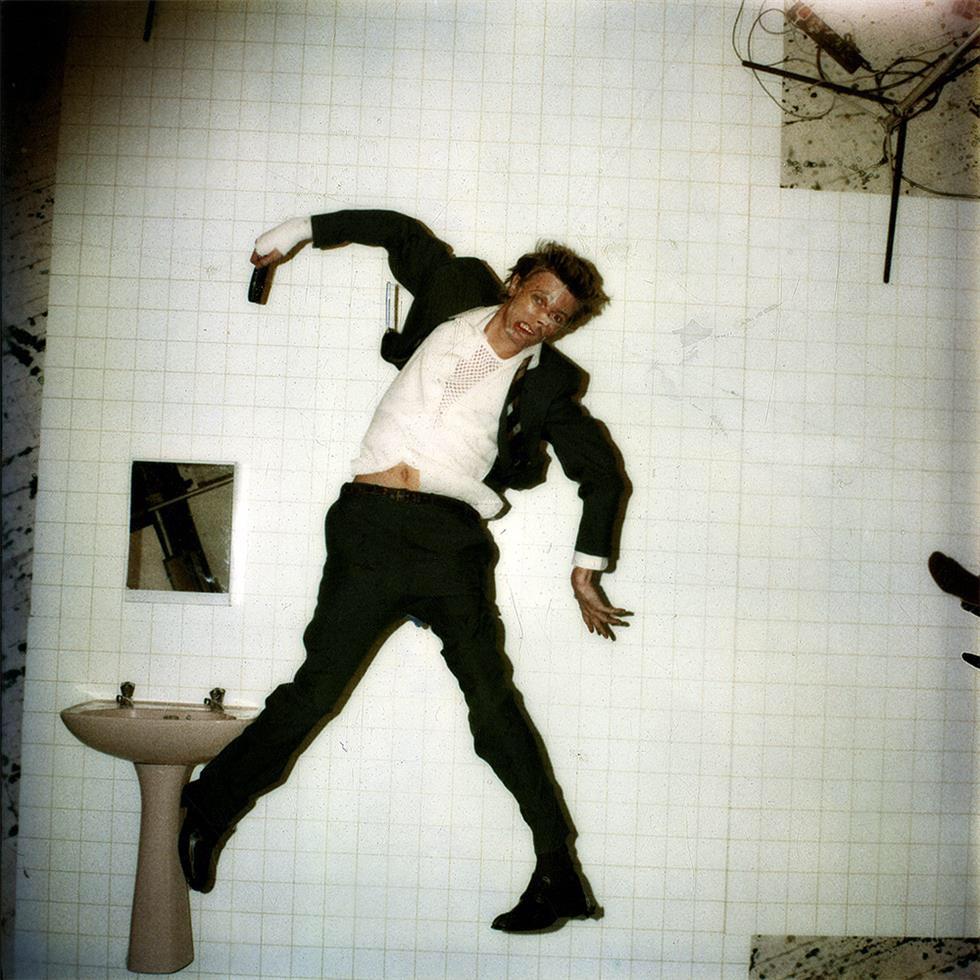
傳奇歌手大衛·寶兒(David Bowie)形象百變,其前衛造型至今仍影響着潮流及時尚界,連Lady Gaga也在模仿這位「搖滾變色龍」。英國攝影師Brian Duffy曾五次為他掌鏡,拍攝Bowie的Ziggy Stardust及Thin White Duke化身,由他操刀的《Aladdin Sane》更是廣為人知,專輯封面的紅藍色閃電形象,更成為一種搖滾視覺符號。
Brian Duffy比Bowie年長十四歲,1957年,24歲的他開始在英國版《Vogue》任職攝影師,短短數年間打響名堂,是1960、1970年代英國時裝與攝影界的叱吒人物。那時候的Bowie剛好相反,雖然出過幾張專輯,卻一直處於半紅不紫,直至1972年在專輯《The Rise and Fall of Ziggy Stardust and the Spiders From Mars》裏創造出雌雄同體的形象Ziggy Stardust。Brian Duffy首次為Bowie操刀,正是拍攝Ziggy Stardust,這個虛構的搖滾明星角色前額有一輪金色太陽圖案,火紅的頭髮、妖豔的妝容充滿顛覆性。他形容當時的Bowie還不是超級明星,只是一位很喜歡打扮的小子,對於他的表現,也只用competent來形容,而不是brilliant。
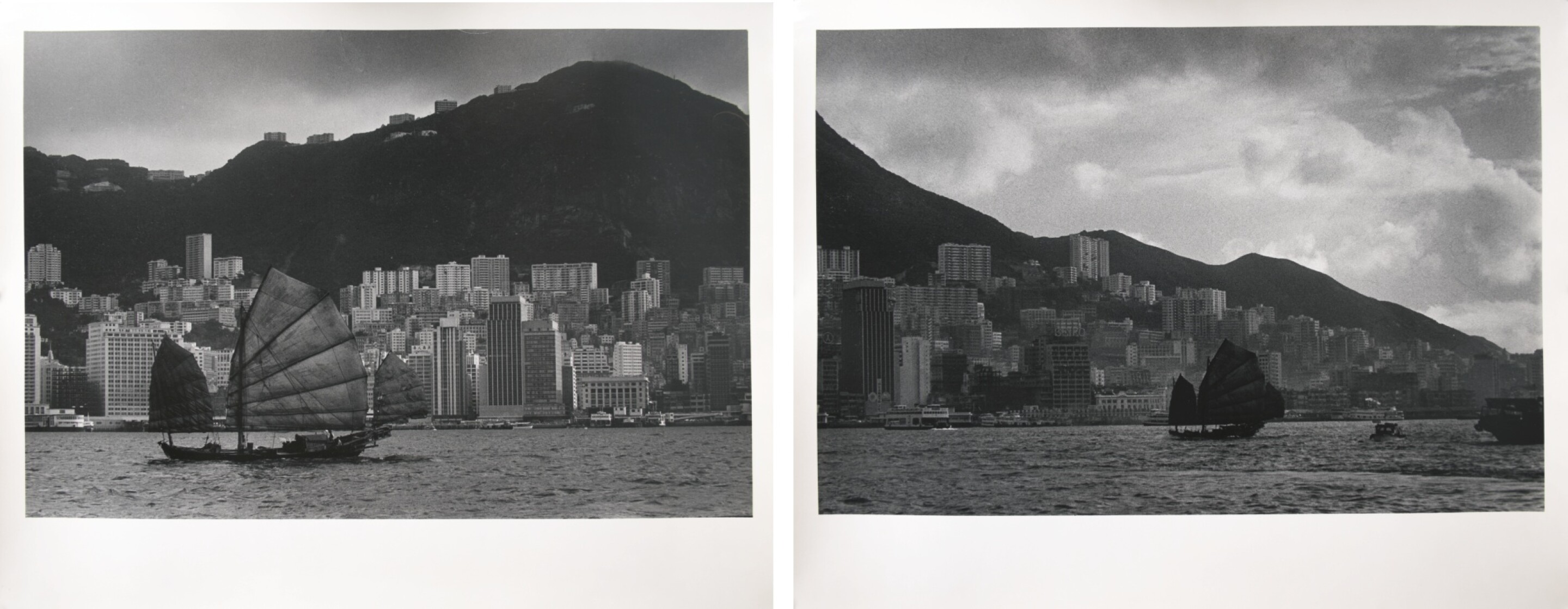
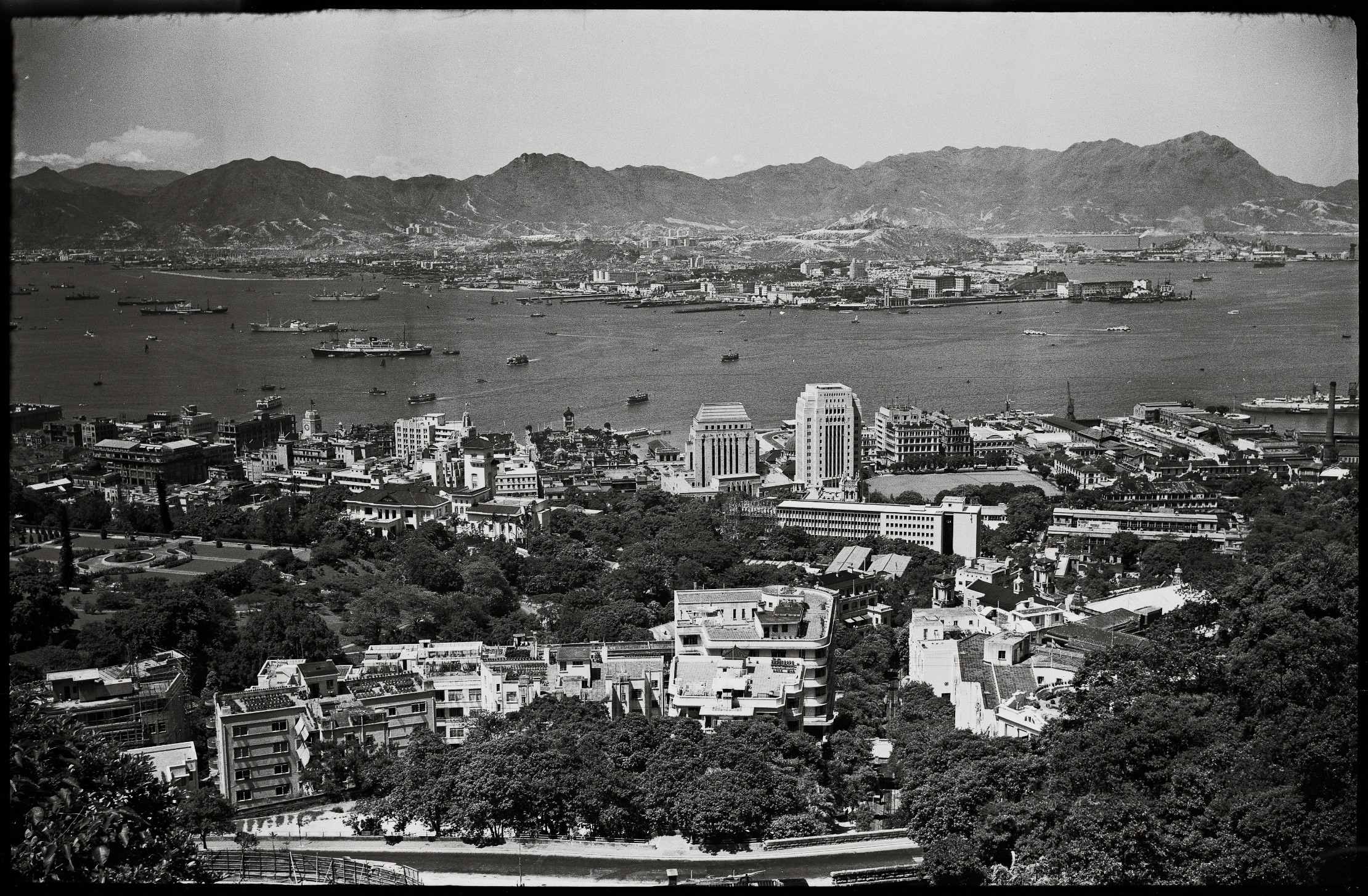
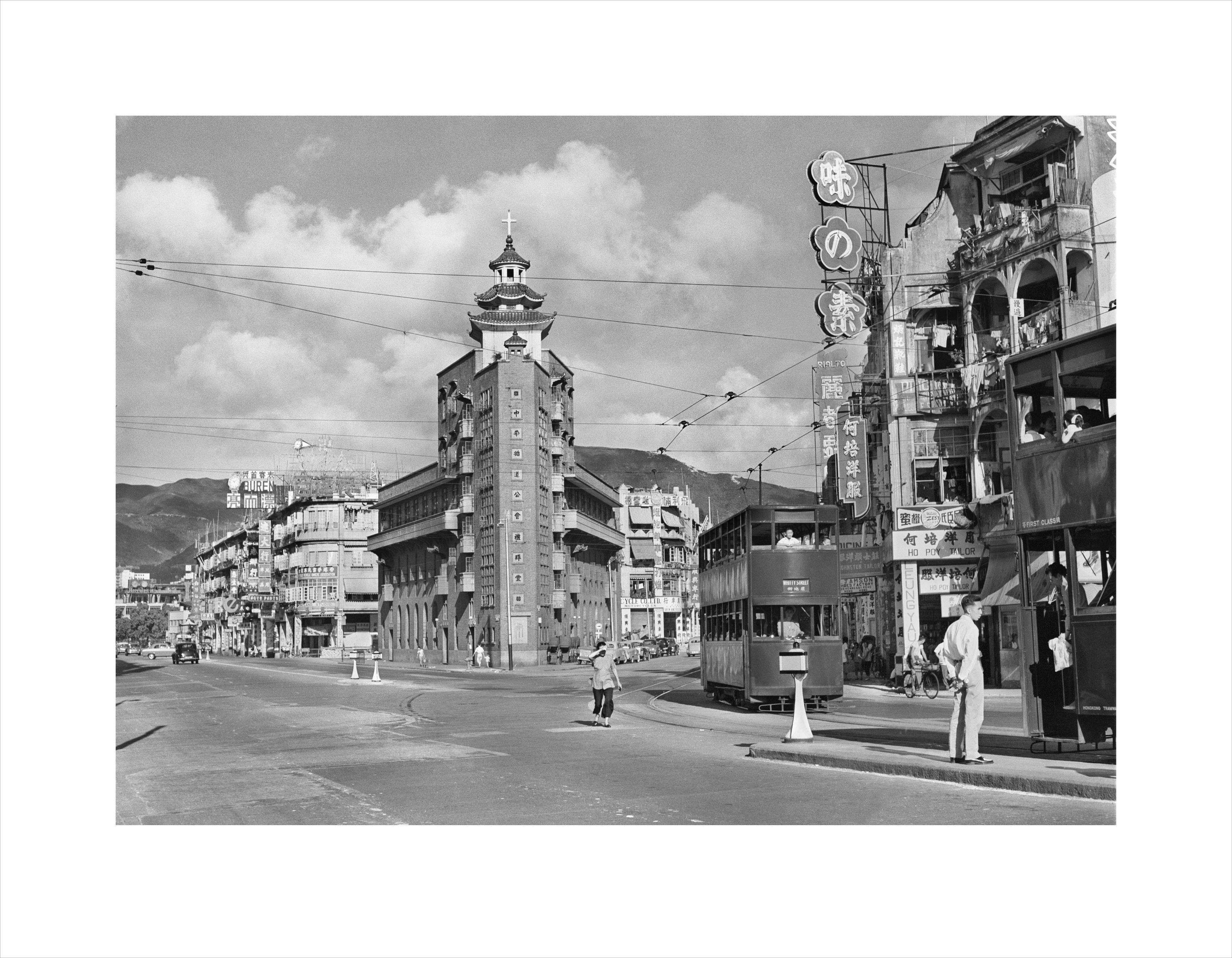
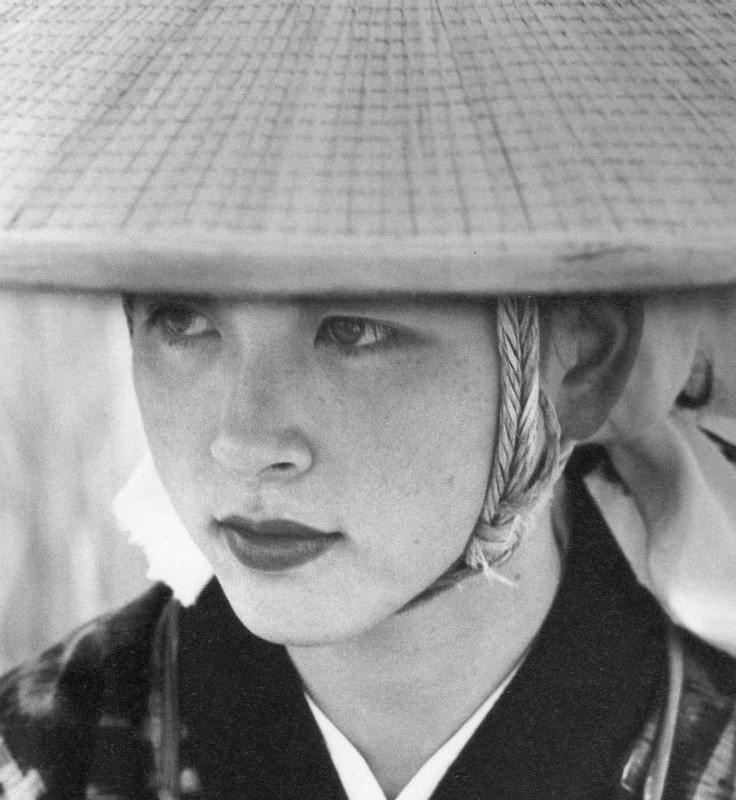
2022年是香港回歸25周年,也是邱良逝世25周年。藝文平台「文化者 The Culturist」及攝影平台「顯影 PhotogStory」共同策劃邱良紀念展《百變香江》(City Vibrance: Hong Kong),展出多張邱良於1960至70年代拍攝、以及由攝影家親手放曬的珍貴銀鹽原作照片,相片也呈現當時港人的樸素日常以及生活的閒情逸致,是難得的集體回憶。
1948年,她在紐約New School for Social Research(這裡也孕育另一位著名攝影師Richard Avedon,學校現改名為The New School)跟隨《HARPER’S BAZZAR》雜誌藝術總監Alexey Brodovitch學習攝影技巧,完成六周攝影課程後,她毅然前往黑人聚居地HARLEM區,一連幾個月在教堂、酒吧和飯店等地方拍攝黑人女模特兒。
這本影集不但令她贏得美國國家圖書獎,更獲American Society of Magazine Photographers頒發終身成就獎。在隨後年月裡,皇家攝影學會成員(Royal Photographic Society)、Master Photographer(國際攝影中心評選)這些頭銜也接踵而來,以肯定這位時代記錄者的成就。踏入21世紀後的她較少露面,在距離一百歲還有三個月之際,Eve Arnold終究敵不過歲月,在倫敦護理院病逝,結束傳奇又偉大的一生,僅希望她與夢露在天國再續情誼。
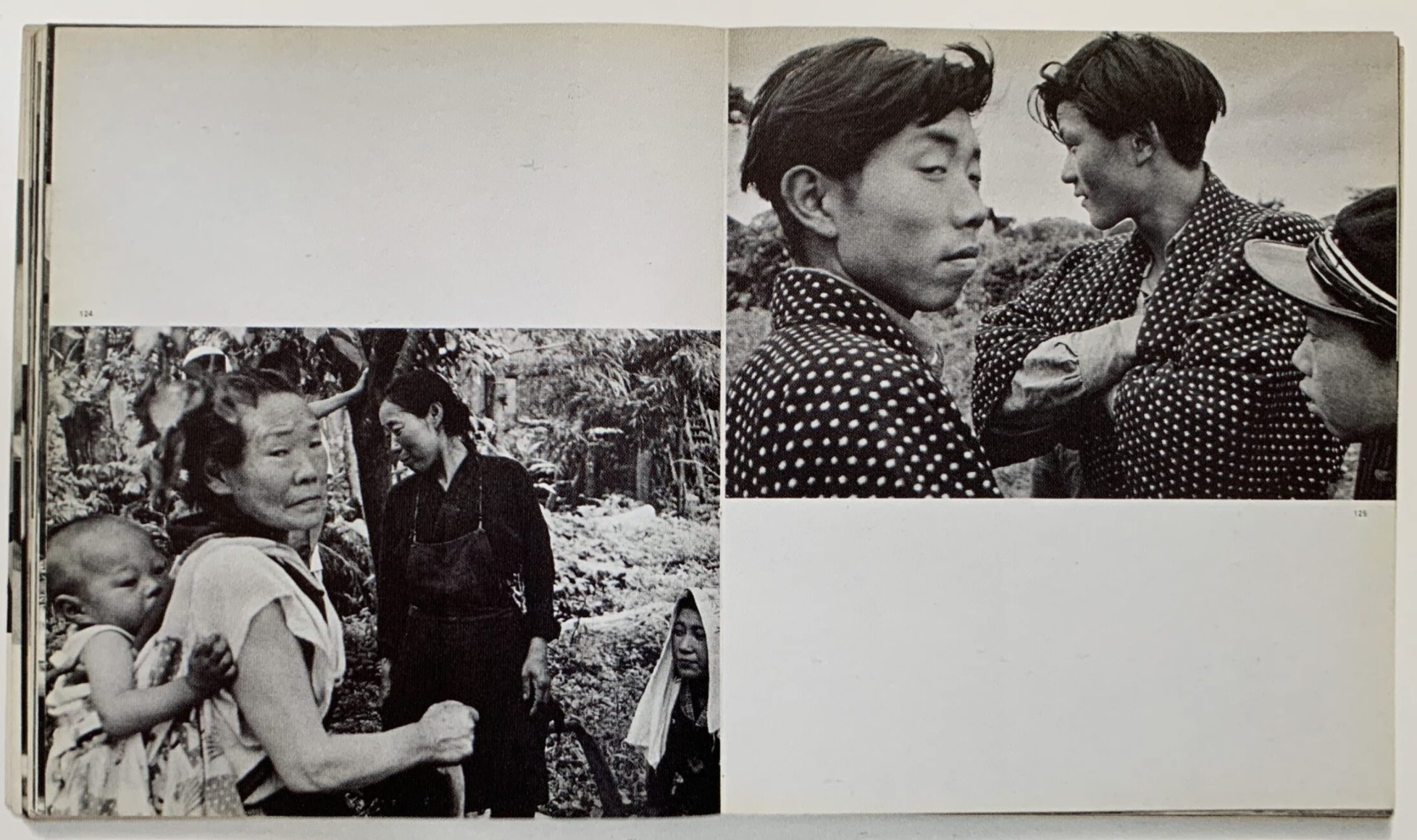
Sabine Weiss曾是《VOGUE》雜誌攝影師,也為許多文化界大人物拍攝肖像,包括作曲家Igor Stravinsky、美國作家F. Scott Fitzgerald、瑞士雕刻家Alberto Giacometti、法國女星Jeanne Moreau、Brigitte Bardot及Coco Chanel等。在攝影工作以外,她喜歡在閒暇時漫遊巴黎街頭,隨性捕捉一般人的生活點滴,令人感受生活的樂趣。著名攝影師Edward Steichen十分欣賞她的照片,當他1955年在紐約現代藝術博物館MoMA策劃上世紀最重要的展覽之一《The Family of Man》時,便展出三張Sabine Weiss的作品。
Swiss-French photographer Sabine Weiss passed away recently at 97. She bought a bakelite camera in 1932 and has been photographing for over 80 years. In 1945, she opened a studio in Geneva and began to shoot portraits and advertisements. After moving to Paris the following year, she worked as fashion photographer Willy Maywald’s assistant. During this time, she honed her photography skills.
Sabine Weiss — La Petite Egyptienne 1983
Sabine worked for “VOGUE” magazine for 9 years and took portraits of many cultural icons, including American writer F. Scott Fitzgerald, French actress Brigitte Bardot. She loved to roam on Paris streets in her spare time, capturing ordinary people’s lives. Photographer Edward Steichen admired her photos and included three of Sabine’s images when he curated the essential exhibitions, “The Family of Man,” at the MoMA in 1955.
In 1952, she met the famous photographer Robert Doisneau and joined the Rapho Agency, representing “Humanist Photography” with Willy Ronis and Brassai. She captured Paris in the 1950s and 1960s with her brilliant black and white images. Sabine once said, “I take photographs to hold on to the ephemeral, capture something that will disappear: gestures, attitudes, objects that are reminders of our brief lives.”
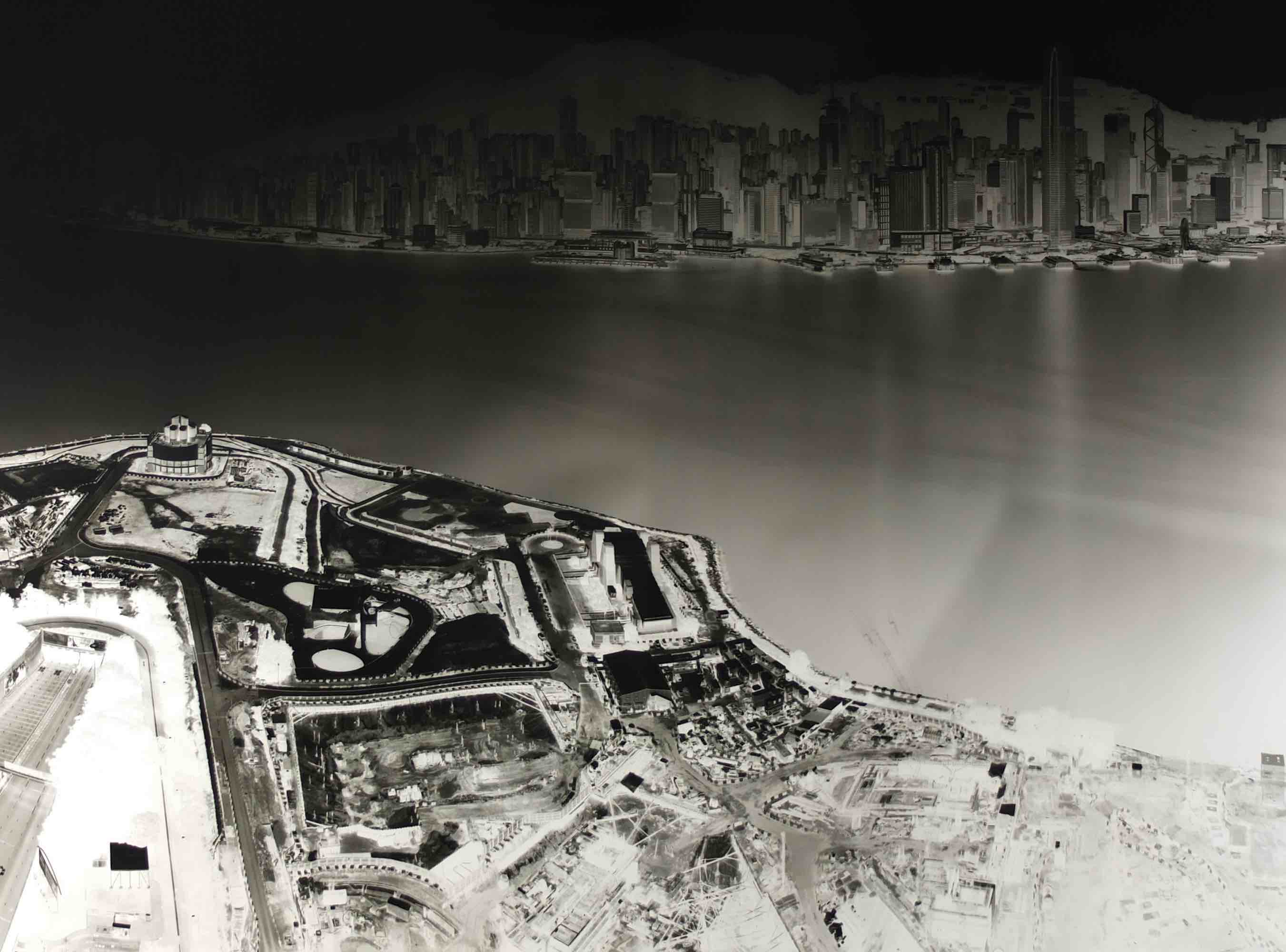
史國瑞是中國著名針孔攝影家,剛開幕的M+博物館,藏有七件他的作品,可惜並沒收藏他拍攝西九龍及維港的作品《To See Hong Kong Island From Kowloon 15-16 July 2016》,這幅暗箱攝影(Camera Obscura)作品最近在10號贊善里畫廊舉辦的二十週年聯展中展出。
Shi Guorui is a well-known Chinese pinhole photographer. One of his works, “To See Hong Kong Island From Kowloon 15-16 July 2016,” was exhibited at 10 Chancery Lane Gallery’s 20th Anniversary Exhibition recently.
In 1990, Shi majored in Photography at Nanjing Normal University and systematically studied the various genres of photography. Although pinhole photography lacks sharpness, the unique visual effects deeply attracted him. Starting in 1998, he focused on creating pinhole photography. He even built a camera obscura a few meters in size for shooting, exposing the image directly to the photographic paper.
Pinhole Photography has given him a better understanding of the artwork and brings him peace of mind during the long exposure process. His largest work is eight meters long, which is undoubtedly a big challenge for constructing the camera obscura and the image processing.
For more than 20 years, Shi has worked on the Great Wall, Mount Everest, Yangtze River, and Times Square. Since 2013, he has conducted site visits in Hong Kong and created artworks at Tai Kwun, Happy Valley, and Victoria Harbour in the next few years. In this photo taken in West Kowloon, he transformed the Deutsche Bank meeting room of the International Commerce Centre into a colossal Camera Obscura to capture the Victoria Harbour.
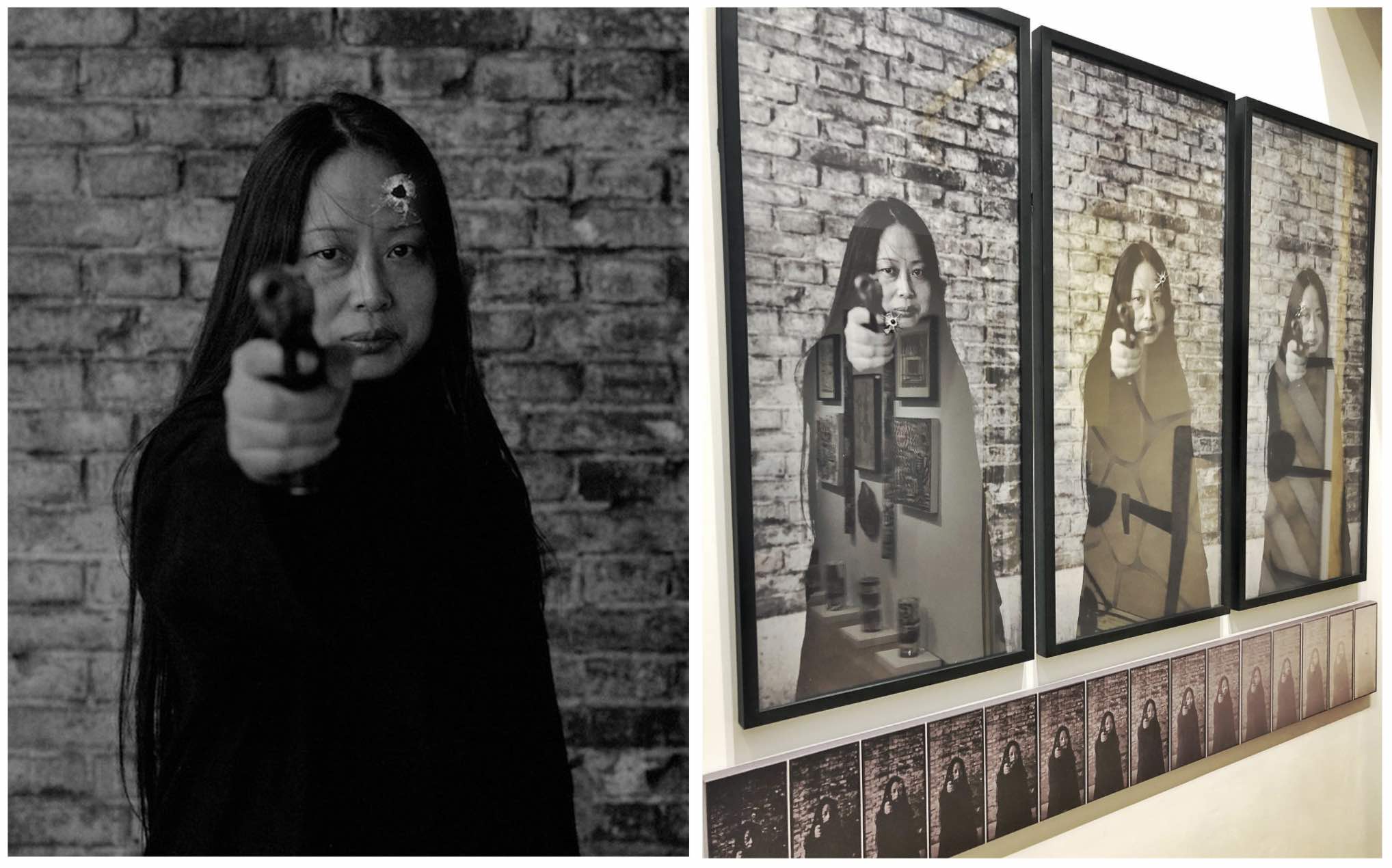
約十五年後,她創作出另一件作品《15槍……從1989到2003》(15 Shots…From 1989 to 2003)。當時,畫家李松松(正是他當年為肖魯提供手槍)為她拍攝手握54式手槍的黑白數碼照片,照片裝裱後運至北京某靶場,肖魯用77式手槍先後向十五張照片開槍,子彈穿透玻璃及照片,在照片中她的額頭、臉龐及眼睛等位置留下槍眼痕跡,宣洩在《對話》作品後隱藏多年的壓力及情緒,藉此也告別他與唐宋近十五年的感情。
On February 5, 1989, artist Xiao Lu fired two shots towards her phone booth installation artwork “Dialogue” at the “China/Avant-Garde Exhibition” held at the National Art Museum of China, which became a crucial moment in Chinese contemporary art history. After the gunshots, she and Tang Song, another artist who helped set up the artwork, were imprisoned for three days, and they became lovers for more than a decade after that.
About fifteen years later, Xiao Lu created another artwork, “15 Shots…From 1989 to 2003.” Painter Li Songsong (who provided Xiao Lu with the gun back then) took a black and white digital photo of Xiao Lu holding a 54-type pistol. The image was mounted and transported to a shooting range in Beijing. Xiao Lu shot each photo with a 77-type pistol bullet. The 15 bullets penetrated the glass and pictures, leaving gun marks on her forehead, face, and eyes in the images. The artwork released her pressure and emotions hidden for many years after the “Dialogue” and bid farewell to her years of relation with Tang Song.
Xiao Lu describes the artwork on her website as below.
Love, The sky Knows. Hate, The earth Knows, Without love; Without hate, The devil knows.
I am no good at theoretical explanation and even worse at talking about art. All I know is real life. As a work, it’s from, for me, is just an internal necessity. It can be a painting or a poem. Perhaps it requires a gun. All of this is decided by your own psychological tendencies, your disposition. This is not anything that can be explained by the word “art,” but rather a survival instinct, your very lift.
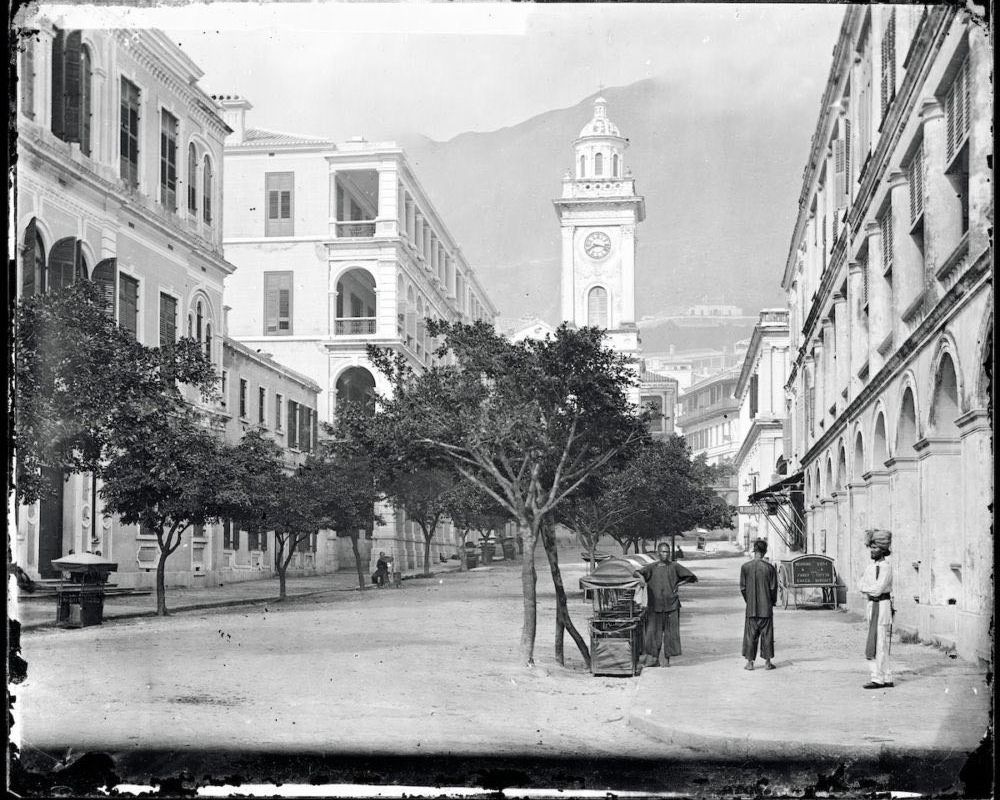
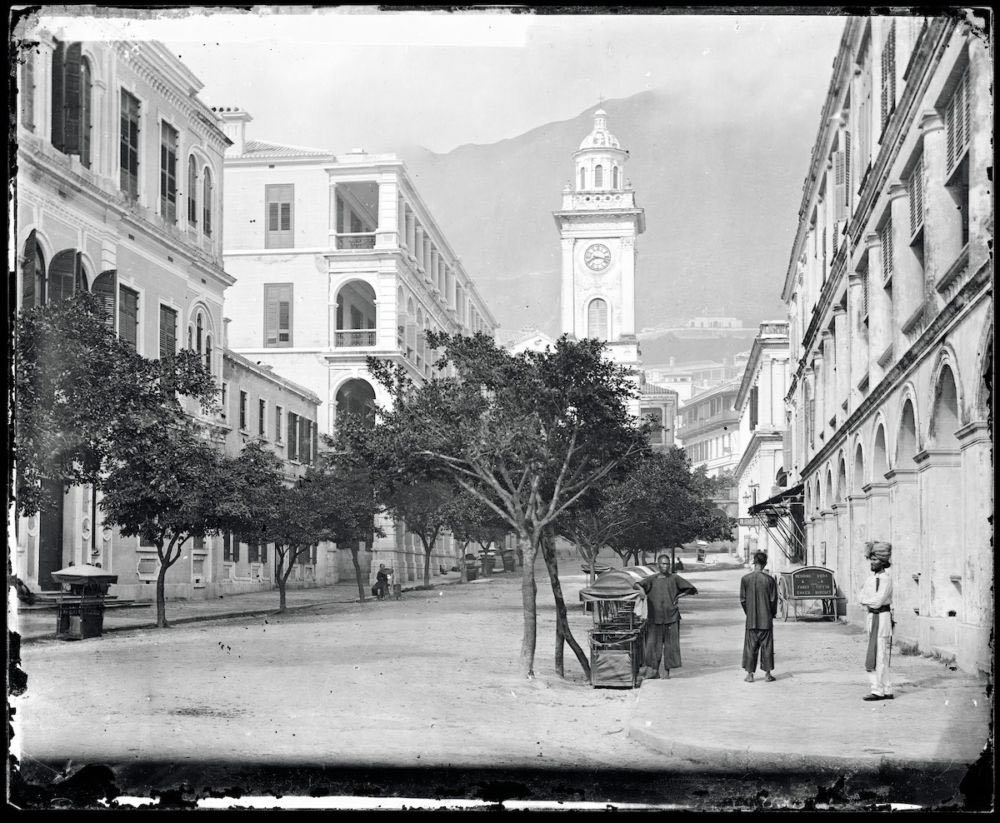
Pedder Street, The Bund, Hong Kong. Photograph by John Thomson, 1868/1871. Photo credit- Wellcome Collection
John Thomson用十年時間在亞洲各地遊歷拍攝,照相機一直陪伴他的旅行,記錄沿途的所見所聞。 1872年回到英國後,他用大量時間整理照片,並出版五套關於中國的著作,包括《中國和中國人照片集》(Illustrations Of China And Its People)、《鏡頭前的舊中國》(Through China With A Camera)等。他是第一位在西方出版圖書介紹中國的攝影師,其著作大大擴闊西方人對中國的認識,也使他名留青史。
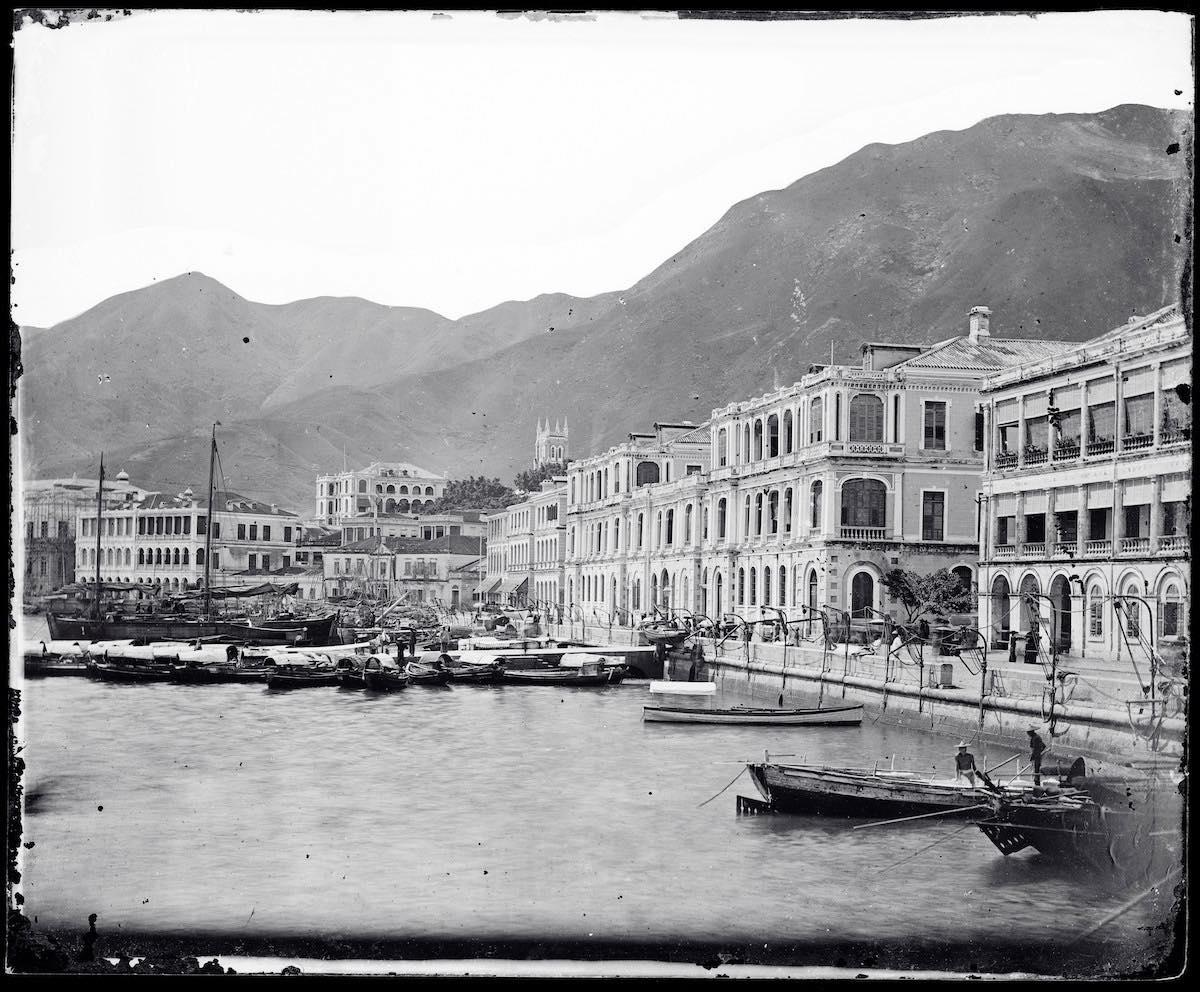
The Bund, Hong Kong. Photograph by John Thomson, 1868/1871. Photo credit- Wellcome Collection
Scottish explorer John Thomson (1837-1921) was one of the first western photographers to photograph Hong Kong. He came to Hong Kong and opened a photo studio on Queen’s Road in 1866. In addition to taking portraits of people with wet plate photography(wet-collodion process), Thomson also likes to document the streets of Hong Kong in his spare time, such as the clock tower in Pedder Street, Government House, Sedan chair, and Lion Rock, leaving precious visual records for Hong Kong in the 19th century, which may be regarded as the earliest street photography.