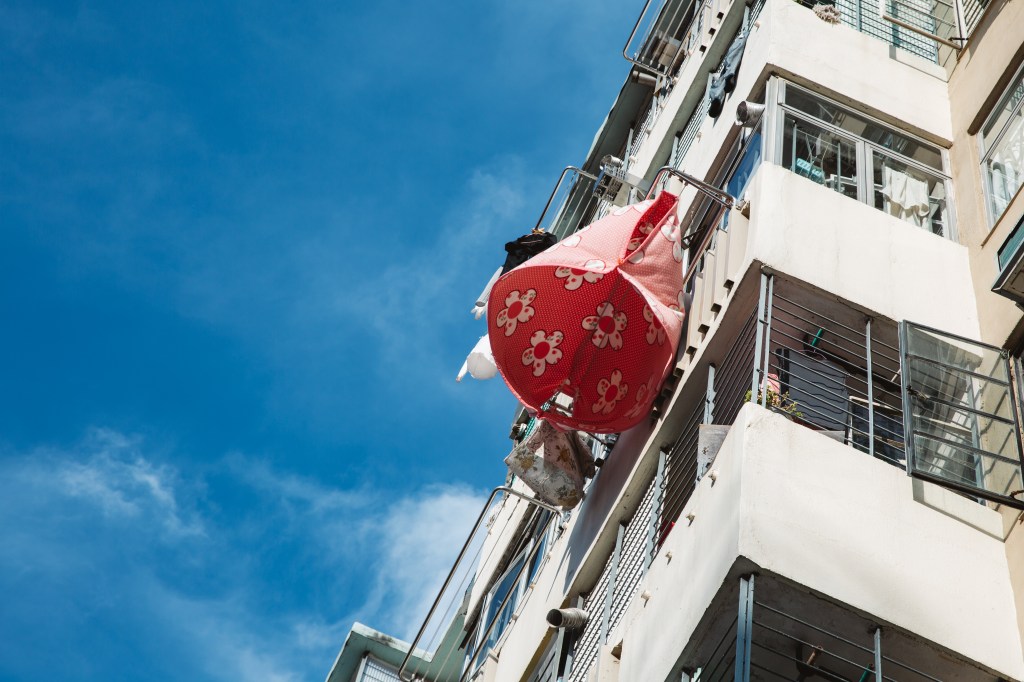
她以4R尺寸展示這些相片,為每張照片手寫上時間及日期,那種感覺恍如翻看家庭相簿的日常照片。表面上那種藍天白雲的平靜,隨着照片下方的時間地點瞬間刺破,例如6月12日的金鐘、11月12日的中文大學。當真相被一片美好包裝,縱然當權者如何歌舞昇平,但眾人經歷過的集體回憶,卻如何也抹不走,the truth is out there。
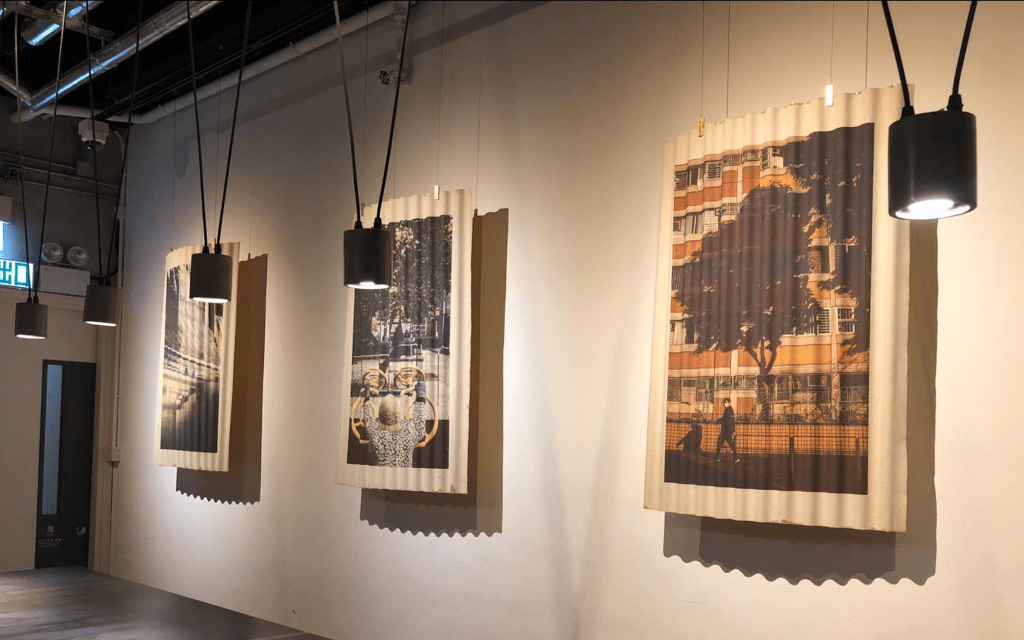
《The Truth is Out There》2020年6月12日至7月18日曾於太子C &G藝術單位展出。
Almond Chu explores social issues with the “parade” series.
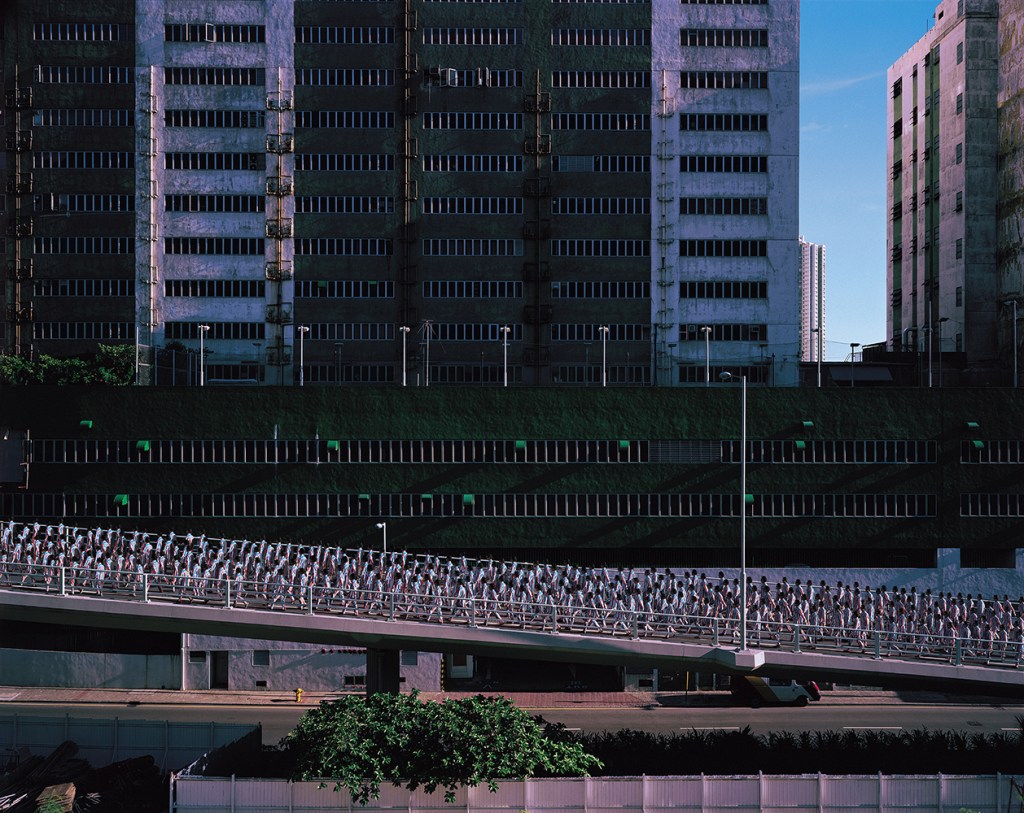
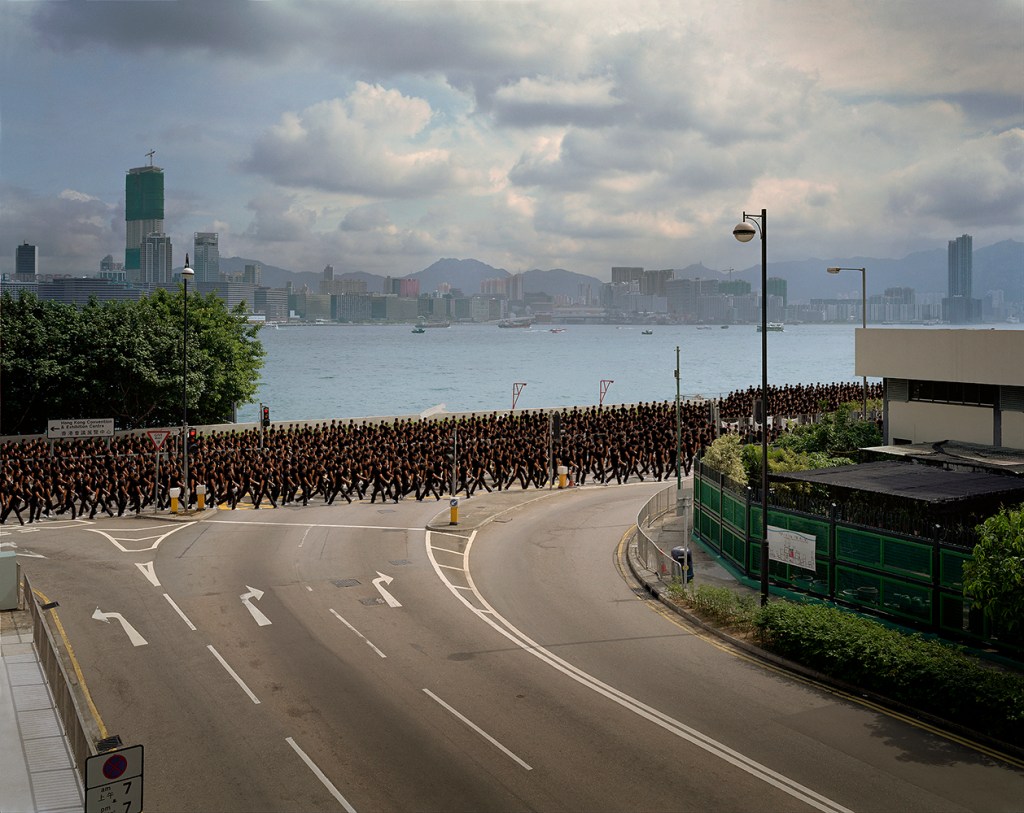
Hong Kong had long been known as the “Parade City” even before last year’s extradition bill demonstration. It has been 23 years after the Hong Kong handover, and people are familiar with protests. On July 1st, 2003, half a million people took to the streets against Hong Kong Basic Law Article 23. Photographer Almond Chu also participated in that year, inspiring him to create the “Parade” series in the following year.
“In 2004, I completed the Artist Residency in Germany. After returning to Hong Kong, I wanted to abandon the shooting technique of portraits and still life in the studio, and began to move forward.” On the one hand, he created the “ARTIFICIAL LANDSCAPE” in landfills and reservoir flooded with garbage, to reflect on the damage caused by humans.
As for the “Parade” series, he selected the iconic buildings of the colonial period, such as the old Star Ferry Pier and the Central Police Station, and related the location with the characters. Most people may not have much memory of the third work near the Wan Chai Pier, “During the 2005 World Trade Conference, Korean farmers once demonstrated and jumped in the sea in this area.”
The “Parade” series was not only created in Hong Kong but also inspired by buildings in Beijing and Guangzhou. “Because of a conversation with the painter Wucius Wong, I was considering the issue of “identity,” so I step into the mainland for inspirations.”
Under the red walls of the Forbidden City in Beijing, numerous security officers wearing sunglasses and green uniforms, which is very iconic among the Parade series. Starting from the fourth work, he tried to interpret the characters in the photos by himself, so that the work has a strong message.
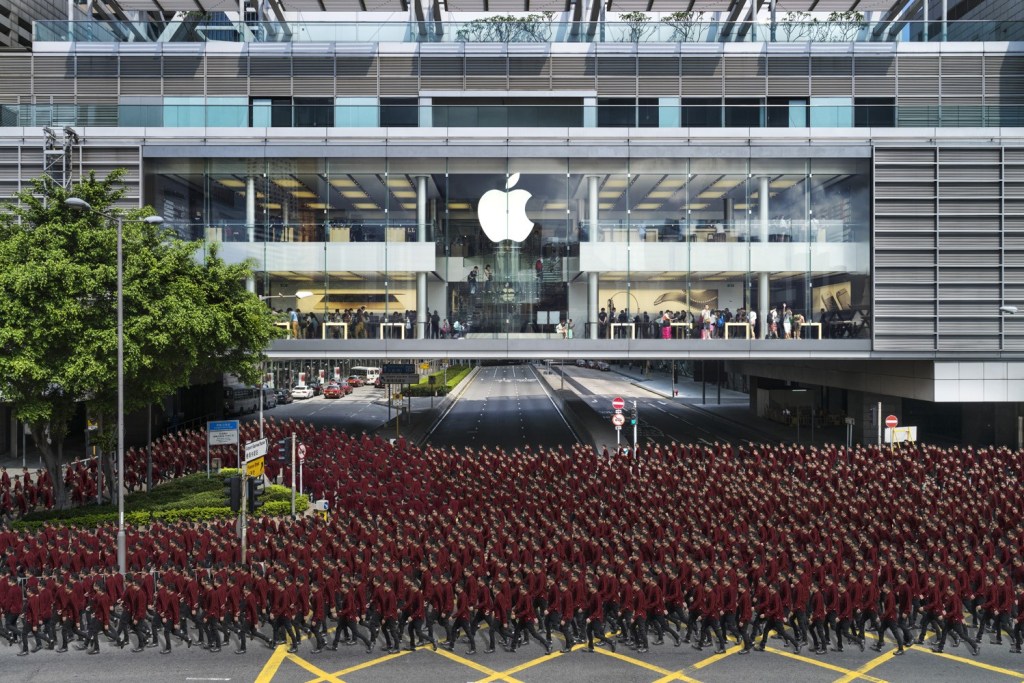
In 2015, he created “Parade 15 (79)” in response to the 2014 Umbrella Movement, in front of the Central Government Complex, 79 people holding yellow umbrellas. The last piece, “Parade 16 (The Apple)”, focuses on the Apple flagship store in Central, reflecting on the fact that when computers and smartphones dominate our lives, does technology ensure people with a better connection?
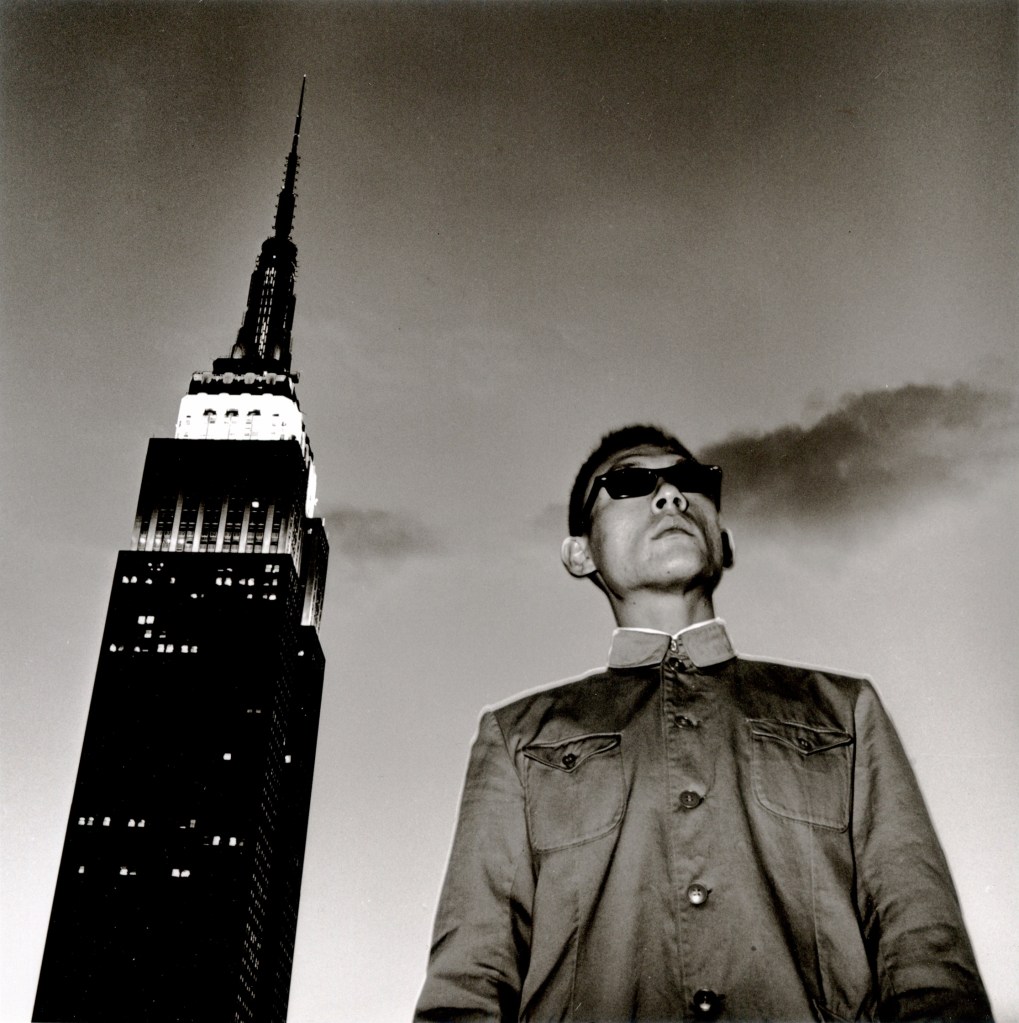
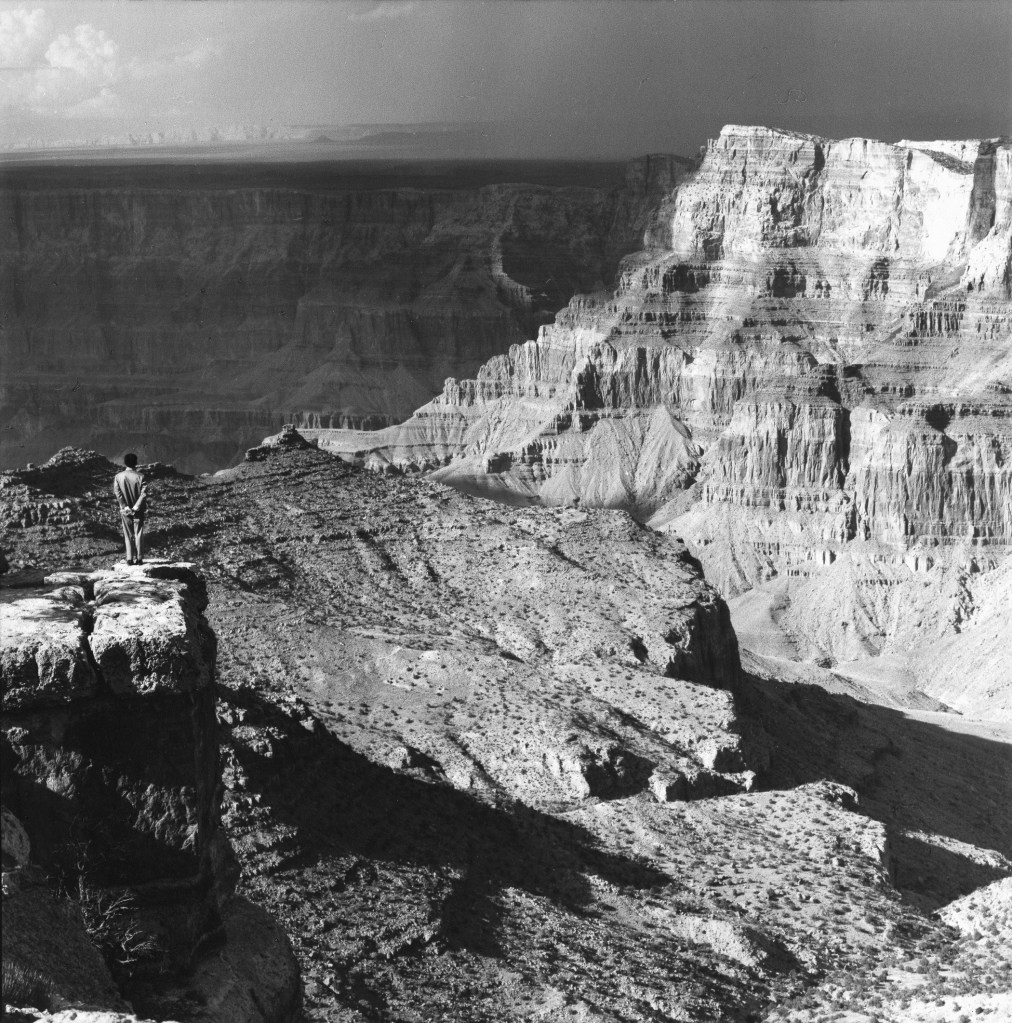
他既是攝影師、又是拍攝對象,甚至可以說行為藝術家。他的鏡頭從不缺乏構圖美學,並非隨便站在風景前擺個姿勢便草草了事,而是在特定的地點,通過特定的角度和構圖呈現出東西方之間的微妙關係,正如那幅與自由女神像的合照,他的神態及姿勢恍如雕塑,令人感受到兩種文明之間的對碰。隨着創作持續,後來他放棄使用快門線,讓自己距離相機更遠,構圖上亦有更大空間。他逐漸走進廣袤的自然景觀,甚至隱入景觀深處,過往強烈的東方主義形象,在壯觀的大自然景色前變得模糊。那幅亞利桑那州大峽谷的壯觀磅礡畫面,令人想起19世紀浪漫主義畫家Caspar David Friedrich的作品。
Grand Canyon, Arizona 1987 (vista shadows with back)