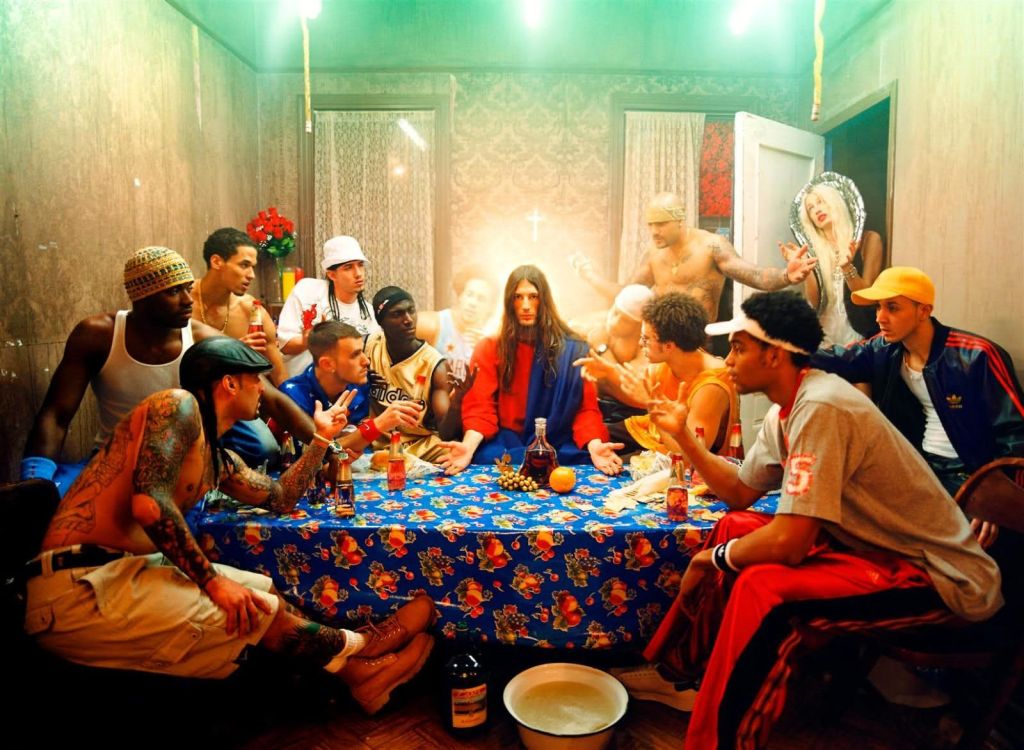
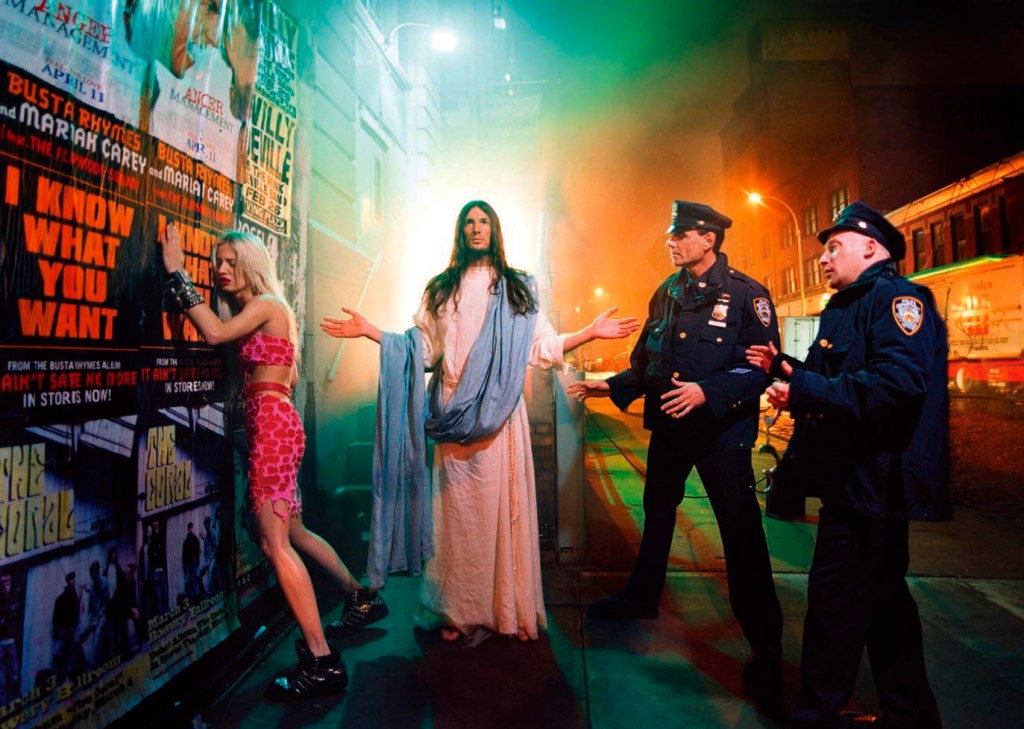
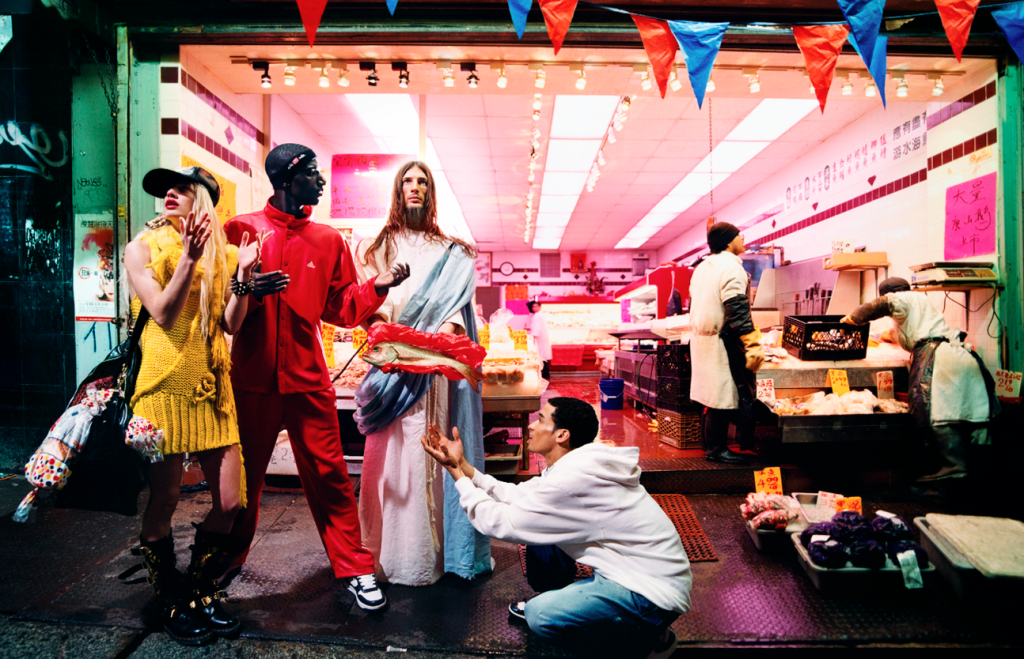
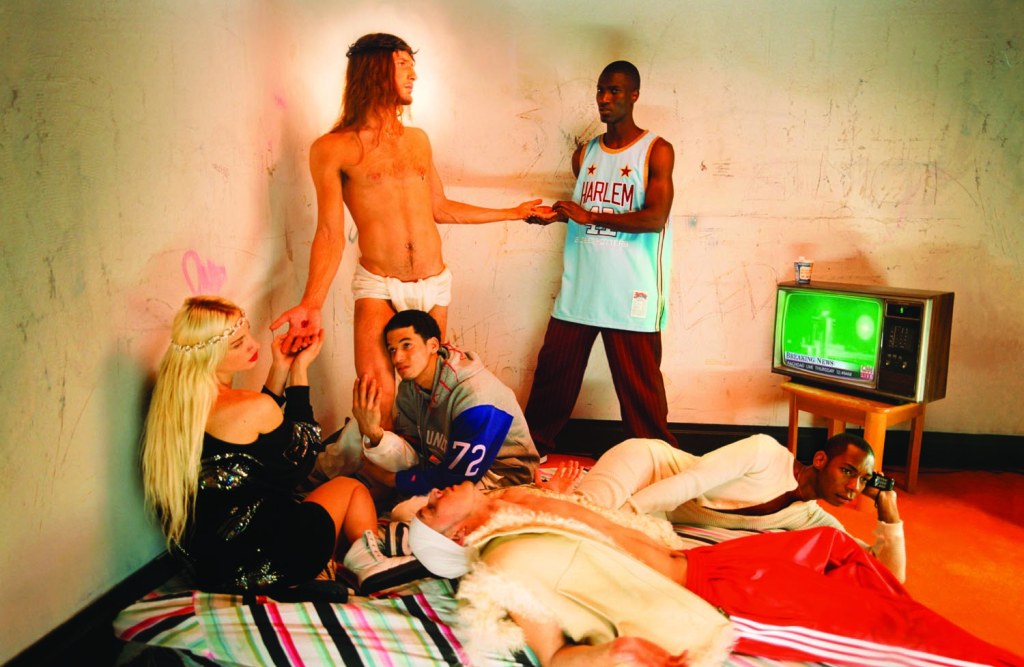
2003年,他見到有人身穿寫有「Jesus is my Homeboy」字句的T-shirt,深受感動的他萌生創作的念頭,如果耶穌來到21世紀,他會有怎樣的門徒?宗教題材向來是他的重要靈感源泉,最經典當然是Michael Jackson扮演的天使,而這系列作品同樣結合時尚與藝術元素,用現代手法重新演繹《聖經》裏的場景,包括五餅二魚、最後的晚餐、寶訓(sermon)及恩膏(anointing)等六幅作品,相片的門徒是流浪漢、妓女及毒販等,他們才是攝影師眼中耶穌在21世紀的門徒。David LaChapelle被喻為「攝影界的費里尼」,他以一向浮誇怪誕的風格,向消費主義盛行的社會提出批判。2008年,這輯作品曾在瑞士一間教堂展出,當「現代耶穌」遇上教堂,應該是個頗有趣的展覽。
TV-01
What will Jesus look like if he appeared in the modern world? The Easter holiday reminds me of the “Jesus” series by American fashion photographer David LaChapelle. He saw someone wearing a T-shirt written with the words “Jesus is My Homeboy” in 2003, which prompted the idea of Jesus came to the 21st century.
Religious themes have always been essential inspirations for David LaChapelle. One of the most iconic artworks is the “American Jesus: Archangel Michael Jackson.” The Jesus is My Homeboy series also combines fashion and artistic elements to reinterpret the scenes in the “Bible” with contemporary expressions, including Loaves and Fishes, Last Supper, Sermon, Anointing, etc.
David LaChapelle has always been ostentatious and grotesque to criticize the consumerist society. To the photographer, the homeless, prostitutes, and the poor people are the disciples of Jesus in 21st-century.
十年前移居法國的Kayee,2015年因哥哥贈送的單反相機才開始攝影,自此彷彿學懂一種新語言。她喜歡人像攝影,也鍾意看油畫,尤其是十六、十七世紀畫家卡拉華佐(Caravaggio)的作品,於是油畫便成為她的靈感源泉。她最近在香港舉辦攝影聯展,展覽現場的作品《The Taking of All of Us》就是源自畫家的名作《The Taking of Christ》。
《The Taking of All of Us》模仿Caravaggio名作《The Taking of Christ》。
另一幅明顯取材自達文西名畫 《最後的晚餐》的作品《Who Is Listening?》,她不但扮演耶穌,還一人分飾十二個角色。畫面右方的人全在玩電話,或自拍或在等訊息,彷彿活在虛擬世界中。耶穌左邊的人似乎在尋求溝通,有人在祈禱,甚至荒謬地融入一個殺人的故事。「每個人都有不同的意見及表達方式,很多時我們表面上在溝通,但實際上究竟有多少人認真在聆聽?」這幅充滿玩味性質的作品,或許正是現實社會的寫照。對她而言,這幅作品還有另一層自身意義,她天生有一隻耳朵沒有聽力,過往她也試過不能溝通的狀況,幸好這沒有對她的語言能力造成影響,還能說一口流利的法文。
展覽現場還有一幅作品《Sisters》系列作品,以16世紀畫作《Gabrielle d’Estrees And One Of Her Sisters》為靈感,畫面中的她按着另一個自己的頭,創作完作品後,她才慢慢理解自己為何要這樣拍攝。Kayee原本是雙胞胎,但另一位胎兒在媽媽的肚裏死去,這個創傷困擾她多年,令她產生一種倖存者的內疚感(Survivor Guilt),也覺得很難與人建立關係。
「這個想法在內心埋藏很多年,直至近年才慢慢走出這個困局,懂得如何去表達這種內疚感,當她將過去兩年創作的《Sisters》系列慢慢連結起來時,才明白為何會創作這系列作品。」這個想法也在另一系列作品《End of the Party》裏得到延續,多個長相、穿着一樣的她身處一座中世紀的莊園裏,隱喻着曾經共處同一子宮的經歷,雖然不知道莊園裏曾經發生過什麼意外,但最後只有一個人倖存,藉此去表達她內心的內疚及罪惡感。
《Sisters 1》以16世紀畫作《Gabrielle d’Estrees And One Of Her Sisters》為靈感。
觀察日常生活 角色互有交流
雖然Kayee的作品靈感源自名畫,也模仿油畫人物的姿勢及光影,不過她相片中人物的動作及反應,也源於對日常生活的觀察,例如人們吵架的表情等,再將人與人之間的互動融入作品。正如作品《Who Is Listening?》,創作時她圍繞中心的耶穌造型展開,用六晚時間逐漸建構出不同角色的造型與動作。影像的美感、構圖固然重要,角色之間的交流與反應,同樣令作品生色不少。
Creative and Humourous Self-Portrait Mimics Famous Painting
Oil paintings, especially Caravaggio’s paintings, inspire Hong Kong photographer Kayee C’s artworks. The work “The Taking of All of Us” is derived from the painter’s masterpiece “The Taking of Christ.” The painting is about Jesus being arrested and taken away after being betrayed by Judas. Kayee plays multiple roles in her image. Judas becomes the person who helps her make up, and the soldier becomes the person who is gesticulating with the finger. Someone was watching and taking pictures. “The social trends (e.g., weight loss) and aesthetics seem to take away women’s freedom of thought. In a sense, women are also participating in this tendency. That is why I represent the women in the image myself.”
The artwork ”Who Is Listening?” is derived from Leonardo da Vinci’s “The Last Supper.” She acted the role of Jesus and played 12 roles. The people on the right are all using phones, taking selfies, or waiting for messages as if they live in a digital world. The person on the left of Jesus seems to be seeking communication. Someone was praying and even ridiculously integrated into a murder story. “Everyone has different opinions and expressions. We seem to communicate with each other, but how much are we listening?” This playful work may be a portrayal of the real world.
The other self-portrait “Sisters” is inspired by the 16th-century painting “Gabrielle d’Estrees And One Of Her Sisters.” Kayee does not understand why she presses the other one’s head down in the picture until she created the work. She was initially twins, but the other fetus died in her mother’s belly. The trauma has plagued her for many years, causing her to feel Survivor Guilt and find it challenging to establish relationships with others. “This feeling has been kept in my heart for many years. It is until recently that I have slowly got out of the predicament, knowing how to express the guilt.”
Women Gaze
Date: Now Till April 25th
Time: 11am-7pm( Mon-Sat), 2pm-7pm (Sun)
Site: La Galerie Paris 1839, 74 Hollywood Rd, Central
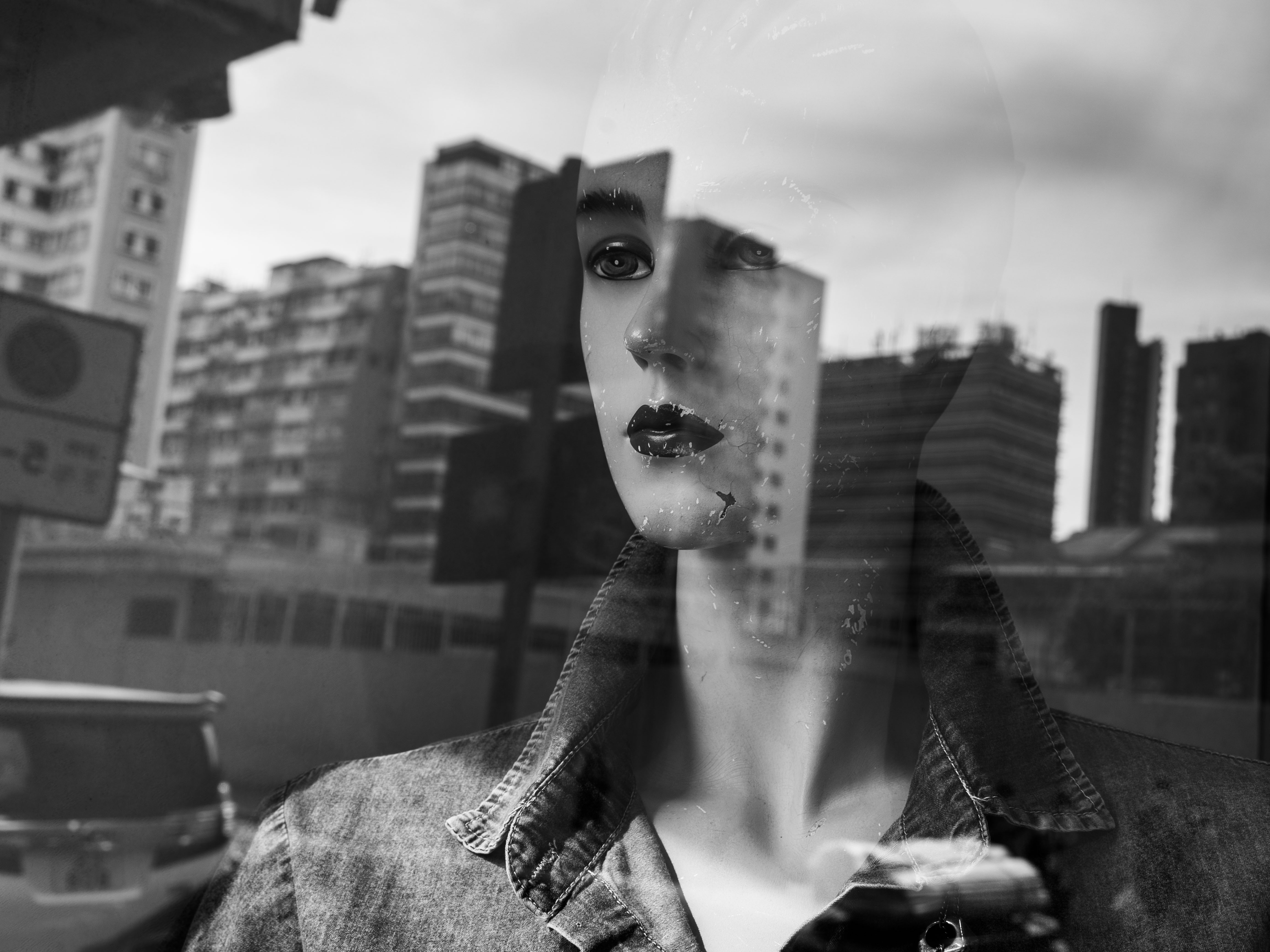
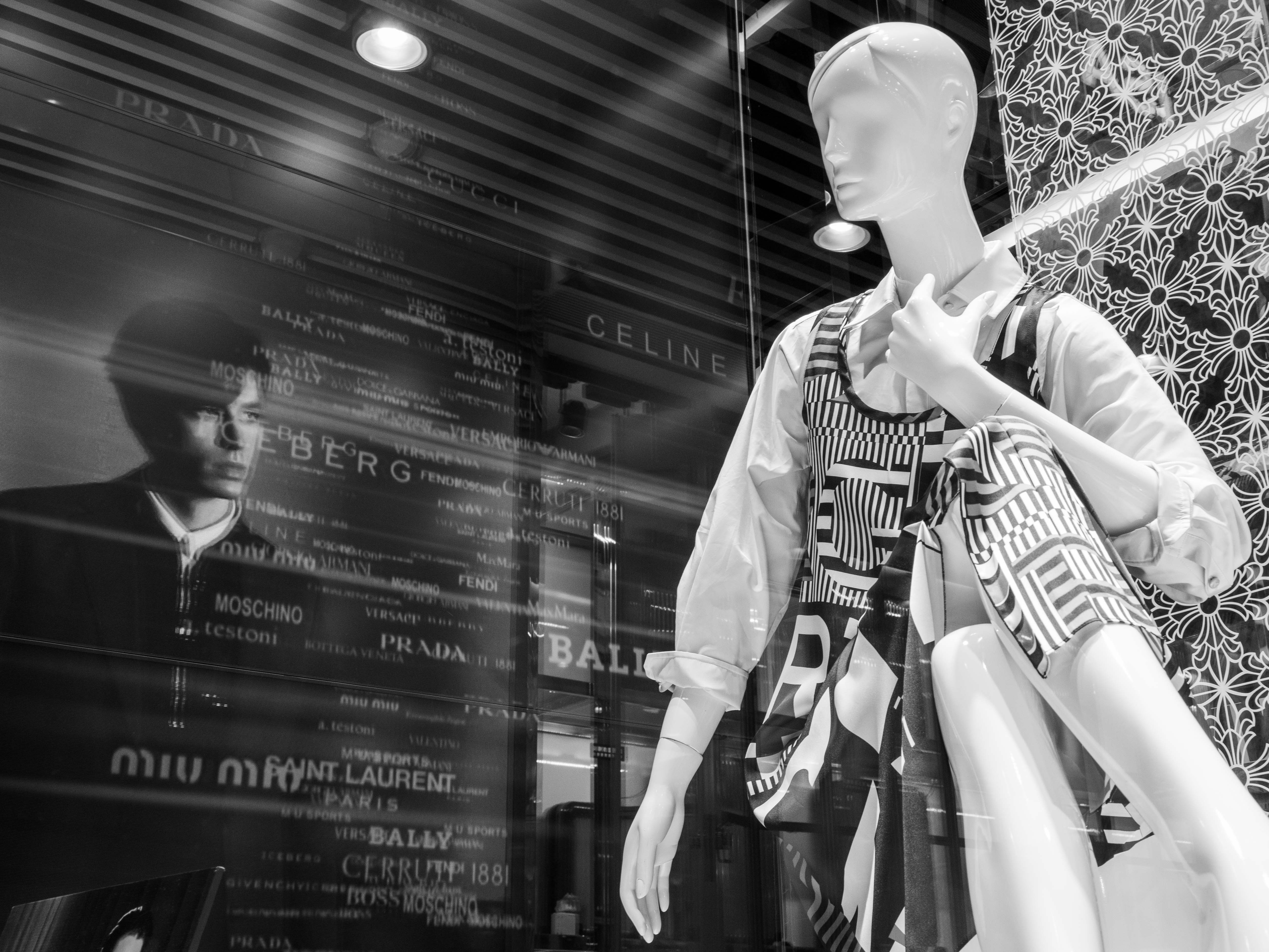
在自然界,一年有四季。隨着速食時裝(Fast Fashion)興起,在時裝界,一年變成52季,每星期都有新貨上架,換裝速度之快令人詫異,換言之,展示服飾的櫥窗公仔每年便要變裝52次。攝影師蔡耀龍(Ray Choi)以櫥窗公仔為靈感 ,2019年展開名為「The Lady of Fifty-Two Seasons」的攝影計劃,當盲目追隨潮流的人季季換衫,其實與櫥窗公仔有何不同?
Ray在2016年開始街頭攝影,當時是為陪伴心情低落的朋友用攝影走出困局,結果反而自己愛上攝影,一直拍攝至今。他曾用四年時間在旺角、深水埗等地拍攝「Long Way Back Home」計劃,聚焦途人的臉孔,他說香港人的臉上總是沒有表情,感覺就如櫥窗公仔。有次,他在太子一間店舖見到破爛的櫥窗公仔,心想究竟它何時會被換走,結果幾個月又幾個月,依舊如故。「一般人只當櫥窗公仔是工具,根本不在乎它有點破爛,只要能展出衣服已足夠。」這啟發他創作《Wounds》,成為這個拍攝計劃的開端。
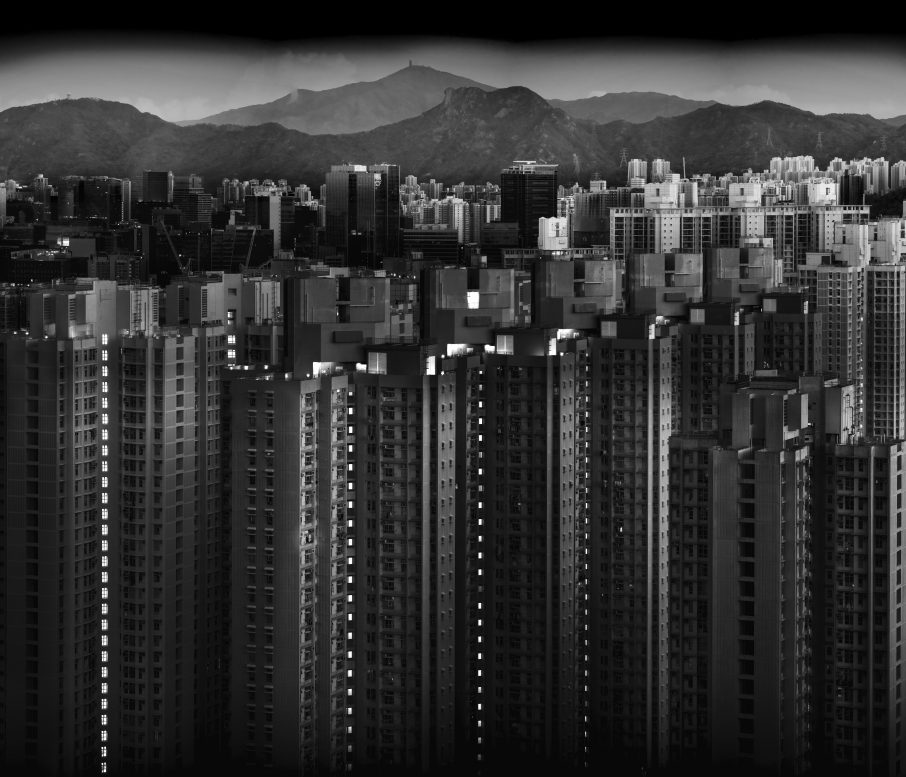
Photography artist Ng Kai Fung created the “Sisyphus Metropolis” in 2019 which he photographed landscapes in Lung Cheung Road, Polytechnic University, and other places.
After experiencing a year of protest, these places have unique significance. He used a shift lens to photograph the city landscape from a distance. Taking “Lung Cheung Road” as an example, this is a landscape of Kowloon East and Lion Rock. The buildings in the picture are straight and compact. It does not seem surprising, but there is a weirdness if you pay attention to the light in the photo.
The building in the foreground is dim, yet the mountain behind is bright. Ng Kai Fung uses image stitching to create high-resolution artworks with the photos taken at different times, intertwining the interlaced images of day and night. “The scenery and lighting look unrealistic, echoing the state of Hong Kong at that time. It was normal during the day but unusual at night.”
Ng Kai Fung studied photography at Hong Kong Art School. His artworks were deeply influenced by literature and philosophy. “The Sisyphus Metropolis” was inspired by the French writer Albert Camus’s philosophical essay “The Myth of Sisyphus.” He annotated the works through words, “When the Almighty loses its dominance in society, politics, especially under Totalitarianism, becomes the only religion. Justice is replaced by the will to power, and they assume freedom is slavery for all.”
“The Myth of Sisyphus” ends with the work “The Monuments,” an image about International Commerce Centre next to the Victoria Harbour. It looks like a high tower and an obelisk of the city. “The tower is a testimony of human civilization, but it has nothing to do with ordinary people. Our lives have not changed. Instead, our morals are getting worse and worse.” The work is presented in the form of a cross to question what faith is. In a world without God, how can we establish a new moral value?