Almond Chu explores social issues with the “parade” series.
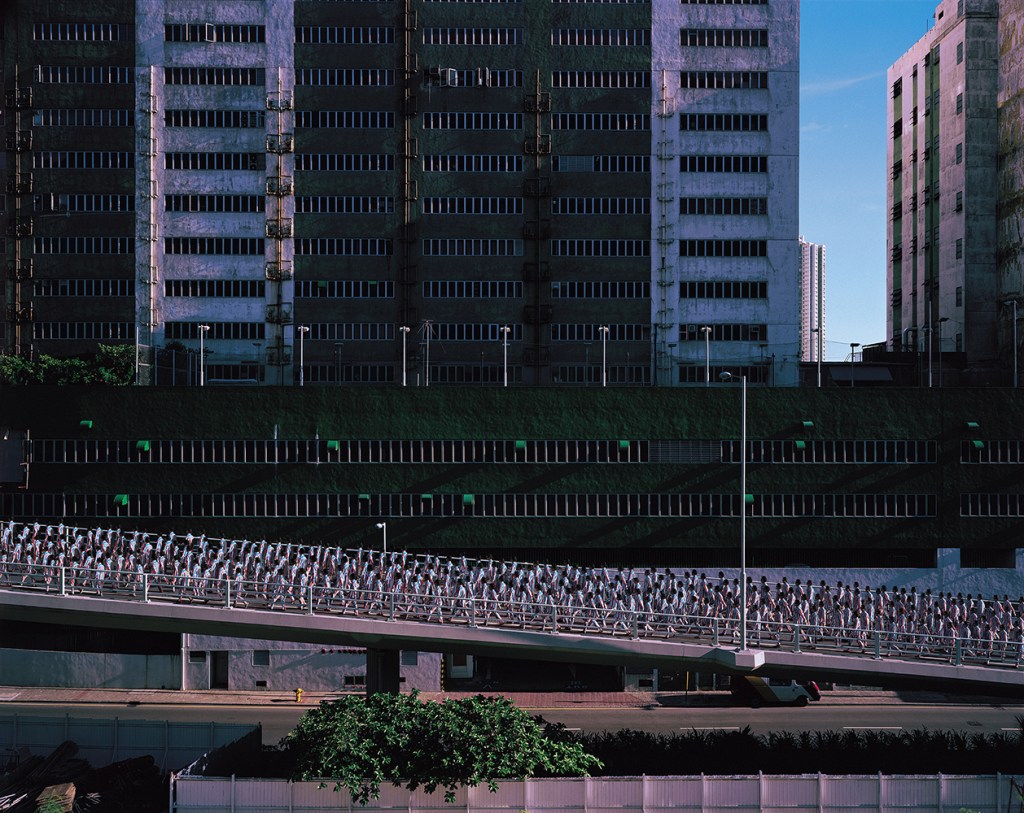
Hong Kong had long been known as the “Parade City” even before last year’s extradition bill demonstration. It has been 23 years after the Hong Kong handover, and people are familiar with protests. On July 1st, 2003, half a million people took to the streets against Hong Kong Basic Law Article 23. Photographer Almond Chu also participated in that year, inspiring him to create the “Parade” series in the following year.
“In 2004, I completed the Artist Residency in Germany. After returning to Hong Kong, I wanted to abandon the shooting technique of portraits and still life in the studio, and began to move forward.” On the one hand, he created the “ARTIFICIAL LANDSCAPE” in landfills and reservoir flooded with garbage, to reflect on the damage caused by humans.
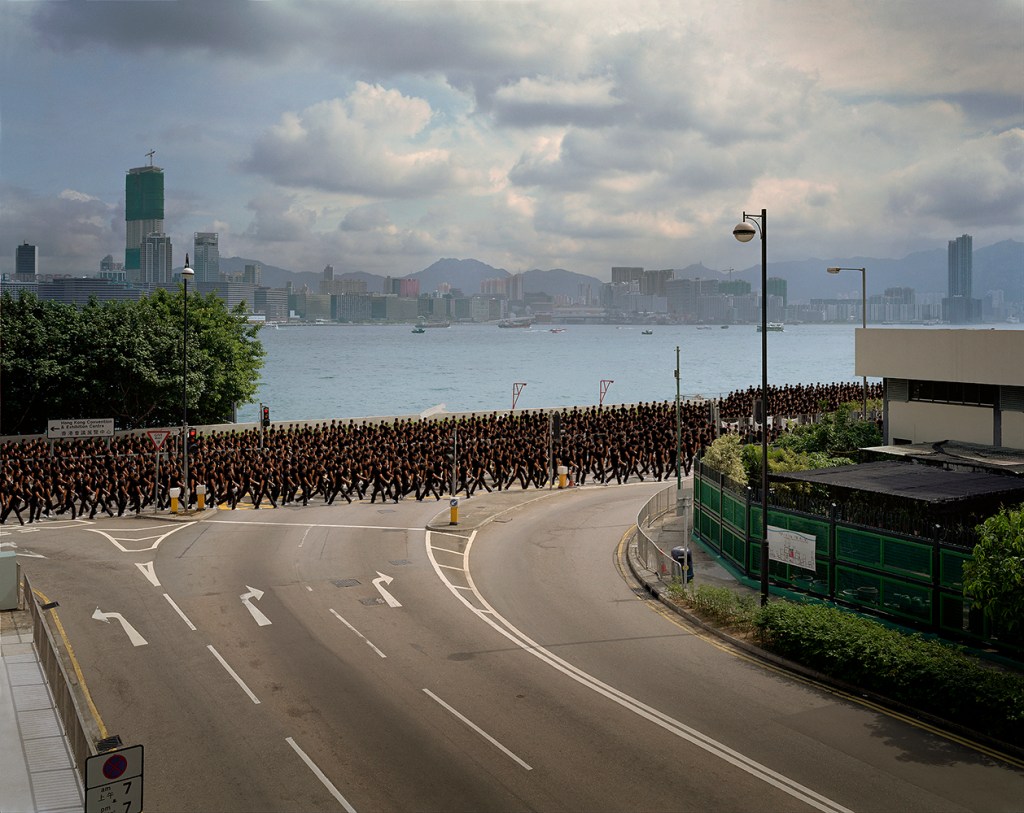
As for the “Parade” series, he selected the iconic buildings of the colonial period, such as the old Star Ferry Pier and the Central Police Station, and related the location with the characters. Most people may not have much memory of the third work near the Wan Chai Pier, “During the 2005 World Trade Conference, Korean farmers once demonstrated and jumped in the sea in this area.”
The “Parade” series was not only created in Hong Kong but also inspired by buildings in Beijing and Guangzhou. “Because of a conversation with the painter Wucius Wong, I was considering the issue of “identity,” so I step into the mainland for inspirations.”
Under the red walls of the Forbidden City in Beijing, numerous security officers wearing sunglasses and green uniforms, which is very iconic among the Parade series. Starting from the fourth work, he tried to interpret the characters in the photos by himself, so that the work has a strong message.
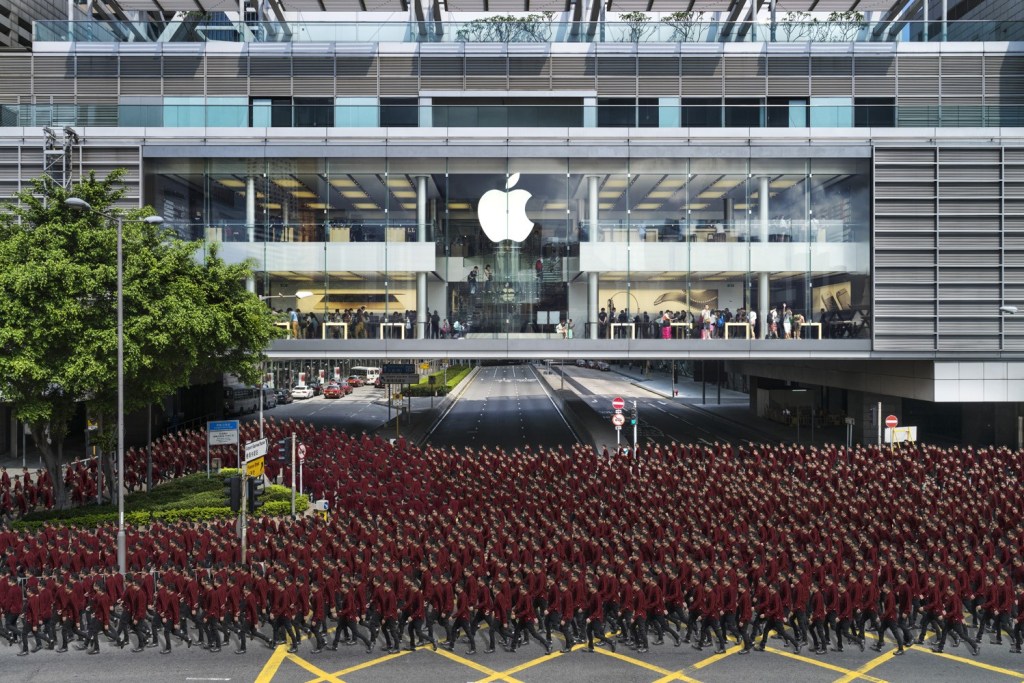
In 2015, he created “Parade 15 (79)” in response to the 2014 Umbrella Movement, in front of the Central Government Complex, 79 people holding yellow umbrellas. The last piece, “Parade 16 (The Apple)”, focuses on the Apple flagship store in Central, reflecting on the fact that when computers and smartphones dominate our lives, does technology ensure people with a better connection?