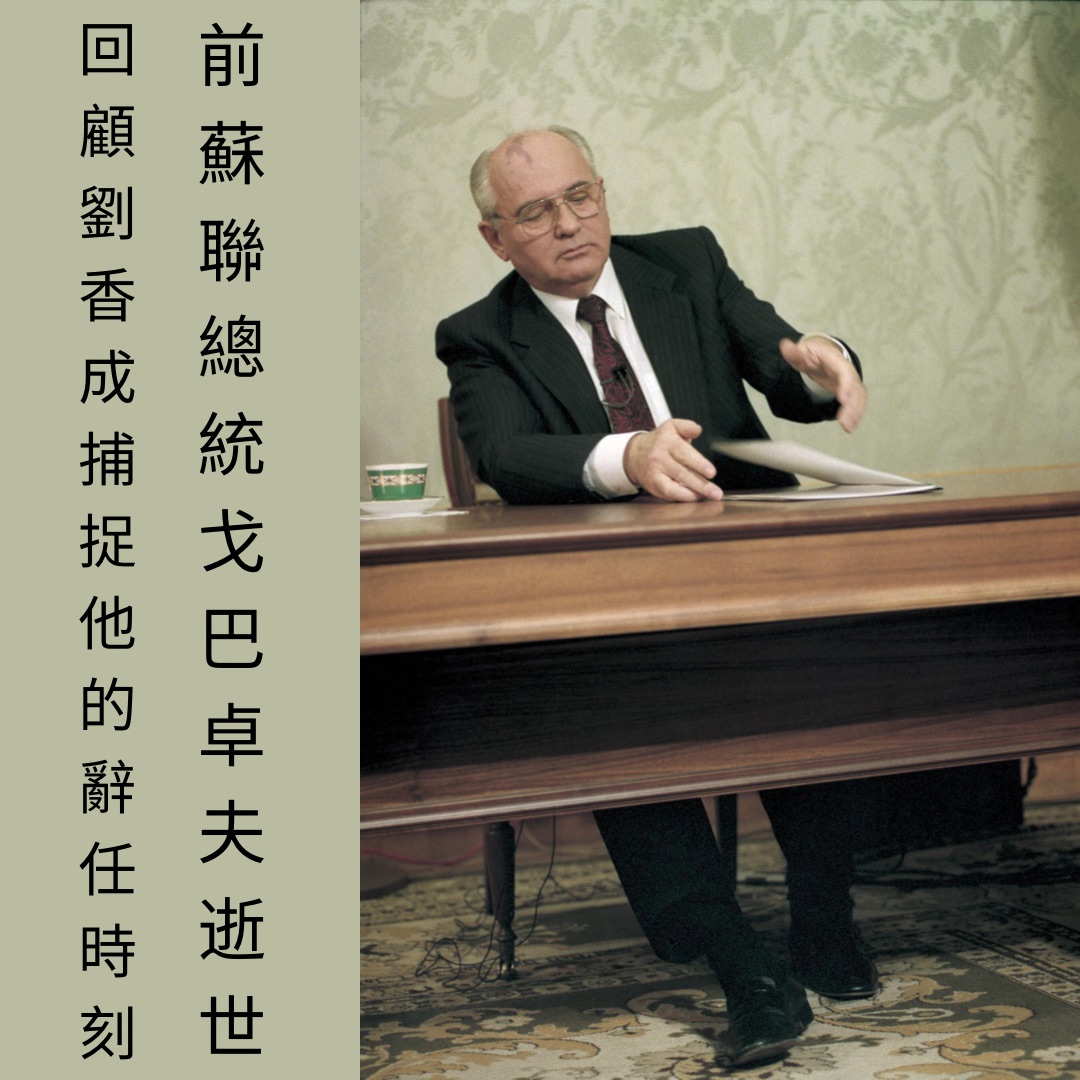
Mihail Gorbachev folded his speech after a televised broadcast to the nation from the Kremlin in which he announced his resignation from the post of General Secretary of the Soviet Communist Party, Moscow, on December 25, 1991, which represents the Dissolution of the Soviet Union. Associated Press Moscow correspondent Liu Heung Shing took this historical image. Here is how he recalled the moment in his book “A Life In a Sea of Red.”
“In order to capture this milestone in 20th-century history. I decided to focus on the moment when, at the end of his speech, Mihail Gorbachev signed his resignation paper. To make it work, it had to be done with a slow shutter of 1/30 second. Only this would show the motion of the speech paper as he laid it down on the table in front of him and, in so doing, laid to rest the U.S.S.R. With only one chance to get the shot at his moment, I had to take what was a calculated technical risk. The slow shutter speed could just have easily resulted in an entirely blurred picture.”
In 1992, Liu shared a Pulitzer Prize for Spot News Photography with his colleagues for documenting the collapse of the Soviet Union. On August 30, 2022, Mihail Gorbachev died in Moscow at the age of 92.
At the occasion of the French May Arts Festival 2023, Boogie Woogie Photography & PhotogStory are pleased to present “French+,” a group exhibition at the Loft in Wong Chuk Hang from 4th May to 3rd June 2023 together with the prestigious Kraemer Gallery from Paris presenting 18th-century French museum quality furniture and decorative art.
+ means more and extra, which also denotes infinite possibilities. French+ is not just about French art but also language, culture, and lifestyle.
The exhibition comprises eleven French photographers and artists’ artworks. It is our first time exhibiting paintings with acclaimed Monaco-based expressionist painter Philippe Pastor. Using living matter, its transformation through time and immediate surroundings, combining soil, pigments, minerals, and plants of all kinds, Philippe Pastor represents his vision of life, environmental destruction, and Man’s involvement in society.
We are also happy to be representing Elsa Jeandedieu, Hong Kong-based muralist. On view is a personal tondo, inspired by the Mediterranean Sea, made of plaster and copper leaves.
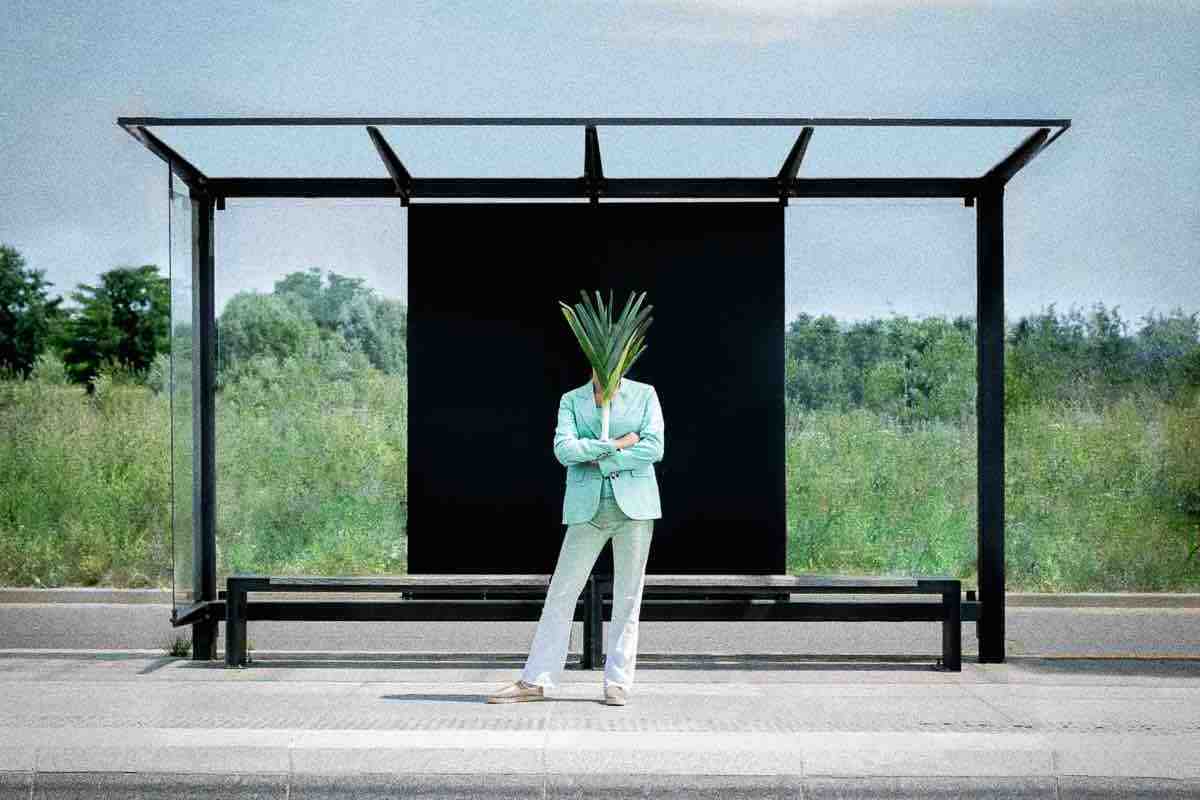
Florence Levillain’s creative and humorous photos are eye-catching among the photography artworks. She takes the French expressions as inspirations and literally turns the metaphor phrases into pictures. This imaginative photography series aims to raise awareness of the lyricism and humor of French language metaphors.
Florence LevillainFlorence Levillain
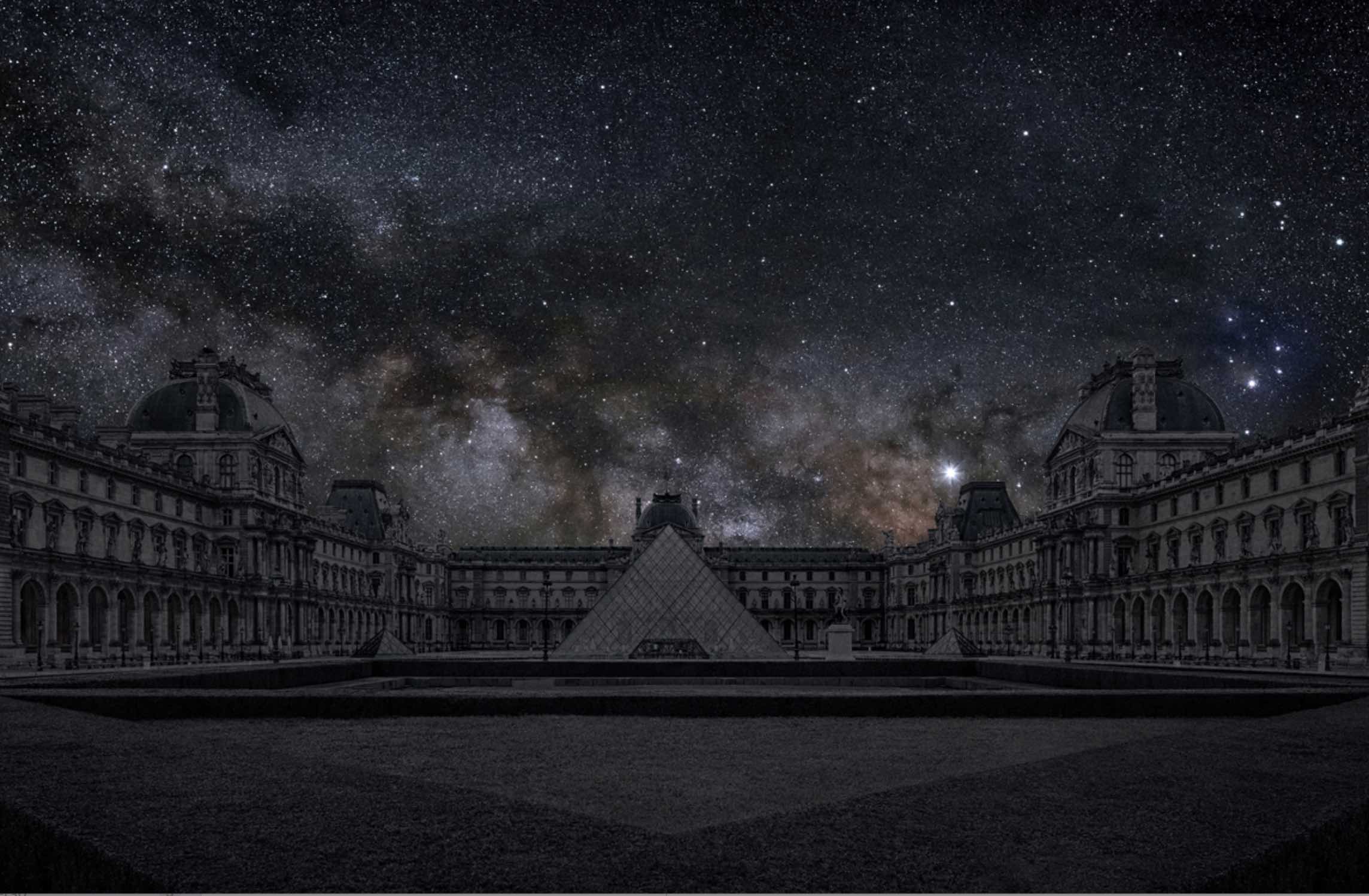
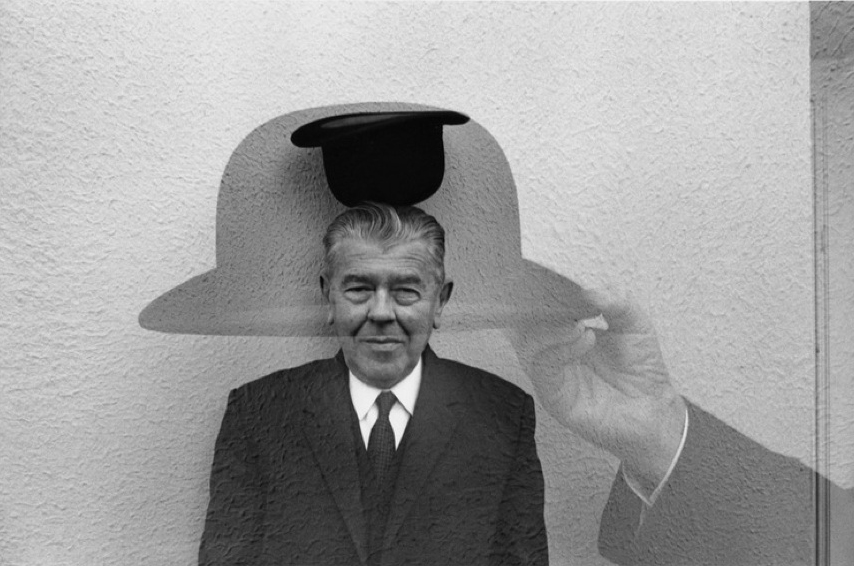
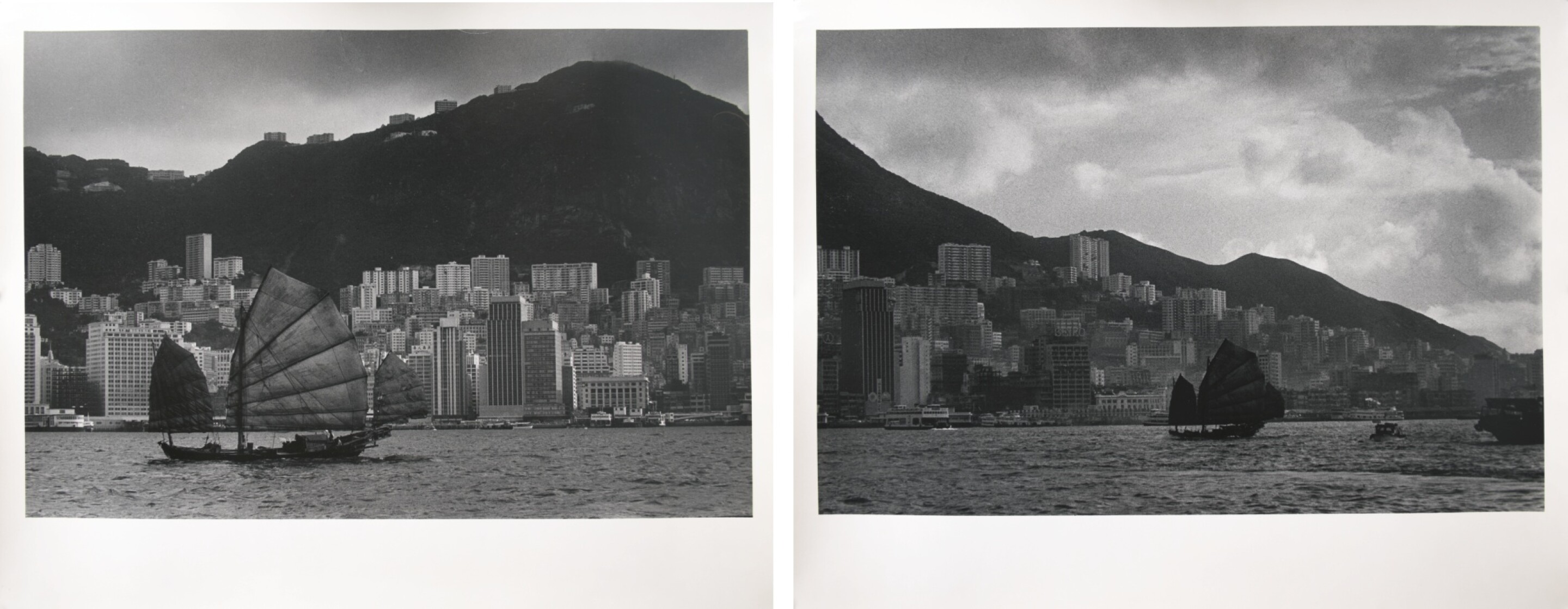
Additionally, French+ can be interpreted as a diverse photography style, like Sabine Weiss’s Dior dress, Willy Ronis’s Paris impression, Raymond Cauchetier’s Hong Kong journey, and Thierry Cohen’s surreal starry sky images, which represent the rich and unique French photography culture.
FRENCH+
Date: 4 May – 3 June 2023
Time: 2-7pm (Wednesday – Saturday)
Address: The Loft, 8/F, E. Wah Factory Building,
56-60 Wong Chuk Hang Road, Wong Chuk Hang.
About Boogie Woogie Photography
Boogie Woogie Photography is a company founded in Hong Kong in 2016 to promote photography in Asia. The mission is to act as a platform for galleries, collectors, companies, and photographers aiming to develop photography projects in Hong Kong and Asia.
About PhotogStory
PhotogStory is an online Photography platform and Guest Curator based in Hong Kong. We focus on stories of local and international photographers, and stories behind classic photos.
Thierry Cohen, Courtesy of Boogie Woogie Photography
Artists Profile
Bogdan Konopka (b. Poland, 1953-2019)
Born in Poland and an immigrant to Paris in 1989, Bogdan Konopka has been photographing cities he visits or lives in from Europe to China. His images are immediately recognizable whether the subjects are a fragment of nature or an interior space. Using large format or pinhole cameras, Konopka pays close attention to the quality of his photographs. His hand-made gelatin silver prints on chlorobromide paper are mostly contact prints, which have the same size as the original negative to achieve perfection. Konopka’s work was collected by Musée National d’Art Moderne and Centre Georges Pompidou, etc.
Elsa Jeandedieu (b. France,1983)
Hong Kong-based French muralist and visual artist Elsa Jeandedieu has been spreading her creative talents and bringing her beautiful, unique texture artworks and wall murals to spaces from Hong Kong, Shanghai, Paris, Italy, and beyond. Her inspiring energy and creativity have resulted in commissioned wall designs, artworks, and luxury art pieces for many high-profile clients, including CHANEL and Victoria’s Secret. Elsa moved to Hong Kong in 2008 and launched her eponymous atelier, Elsa Jeandedieu Studio, in 2015, where she now heads up a team of dedicated artists.
Florence Levillain (b. France, 1970)
Florence Levillain began an independent career as a reportage photographer in 1994. She explores various territories ranging from the business world to the streets of the suburbs. She works for the press (Liberation, Le Monde, Paris Match, etc.) and carries out numerous reports abroad on social issues. She won the Kodak Prize in 1999 for reportage on women working at night in Rungis, a commune in the southern suburbs of Paris. Florence Levillain’s work has always focused on rediscovering the universes close to everyone but unknown or forgotten by many. Her new work, “au pied de la lettre,” is an unusual series of photographic works that aims to raise awareness of the lyricism and humor of French language metaphors.
Isabelle Boccon-Gibod (b. France, 1968)
Lives and works in Paris, Isabelle Boccon-Gibod was trained as Engineer in France (Ecole Centrale Paris) and the U.S. (Columbia University, NY). Her life has mixed art and industry throughout her career. Having first worked on collages and installations, she elected photography twenty years ago as her core medium. She attended the Photography School of Brussels, Belgium. Her work is project-based, photography offering the means to explore specific territories. She likes to employ ad-hoc techniques. Her work is collected by Centre Pompidou, Paris.
Jacques Henri Lartigue (b. France,1894-1986)
Known for dynamic photographs of car races and fashionable ladies, Lartigue made a decisive departure from the stiff formality that characterized early photography to capture joyful, carefree scenes of bourgeois leisure. Born into affluence, he documented the excitement of the final years of the Belle Epoque with a gimlet eye and photographed the wealthy vacationers on the French Riviera from the 1920s through the 1960s. Lartigue’s work was underappreciated until the Museum of Modern Art exhibited his photographs in 1963.
Patrice Bodenand (b. France,1958)
Born in France in 1958, Patrice Bodenand made his career in the textile industry, which gave him the opportunity to travel and the desire to discover other countries and cultures. He immigrated to Hong Kong in 2000, then to Mauritius Island and to China, in Qingdao, to return and finish his career in Hong Kong. “What is exciting in photography is to capture a precise moment to fix it in time, even without chronology, but just for memory, individual or shared.”
Philippe Pastor (b. Monaco, 1961)
Philippe Pastor was born in Monaco. He works between Monaco and Spain. Committed to the environment, Philippe Pastor has developed a personalized vision of nature through his work, translating Man’s interaction with the planet. Since 1990 his work has been recognized at Venice Biennale and has been shown around the world. He is the official artist of the Monaco Pavilion at the Universal Exposition EXPO Milano 2015.
Raymond Cauchetier (b. France, 1920-2021)
Raymond Cauchetier was the most famous photographer of the French New Wave. His first photographs were taken in his thirties while serving in the French Air Force press corps in Indochina. Cauchetier traveled through Hong Kong in 1954 and stayed for one week. He left a bouquet of memories, a little yellowed but always authentic.
Sabine Weiss, Chez Dior, Paris, 1958 Courtesy of Boogie Woogie Photography
Sabine Weiss (b. Switzerland, 1924-2021)
Sabine Weiss decided to become a photographer when she was eighteen, during a time when being a photographer was not a common profession, especially for a woman. Sabine Weiss apprenticed under photographers Frédéric Boissonnas and Willy Maywald, and Vogue hired her as a photo reporter and fashion photographer in 1952. Robert Doisneau discovered her photography and asked her to join the humanist-leaning photo agency Rapho, allowing her to work and travel for many other publications such as Time, Life, Newsweek, and Paris-Match.
Thierry Cohen (b. France, 1963)
Thierry Cohen has been a professional photographer since 1985 and a pioneer in the use of digital techniques. He lives and works between Paris and Monségur, close to the Atlantic Coast. Since 2006, he has devoted most of his time to personal work. Thierry is interested in the impact of human activities, particularly on nature. His works are held in private and public collections and regularly exhibited in New York, Los Angeles, and Paris.
Willy Ronis (b. France, 1910-2009)
After selling his first photograph to the newspaper L’Humanité in 1935, Willy Ronis worked as a press photographer. Ronis always linked his personal experience to his work, which also developed and grew through contact with friends and family: portraits of Marie-Anne, his wife (including the famous Le Nu provençal), his son Vincent, his cats, his friends (Robert Capa) and personalities he met (Sartre, Brassaï, etc.) express the same poetics of the universal as the rest of his work.
Boogie Woogie Photography & PhotogStory are pleased to present “On The Road,” a group exhibition at the Loft in Wong Chuk Hang from 18th March to 29th April 2023.
On this occasion, we are pleased to announce the collaboration with Kraemer Gallery, with notably, on show and available for sale, 18th-century antiques and artwork that provide a contrasting yet harmonious visual backdrop to the more modern photographic prints on display.
The exhibition title comes from American writer Jack Kerouac’s novel “On The Road” published in 1957. As the narrator says in the book: “Nothing behind me, everything ahead of me, as is ever so on the road.” The story depicts several youngsters setting out for road trips in the United States. They are immersed in a hedonistic atmosphere and pursue the freedom of life and soul while traveling across America.
Roger Ballen, Motorcyclists, Woodstock, 1969, Courtesy of Boogie Woogie Photography
The exhibition comprises fifteen Hong Kong and international photographers’ artworks about their journey, including Raymond Cauchetier and Roger Ballen’s road trip images. These pictures are reminiscent of Jack Kerouac’s novel, which demonstrates people’s lifestyles through various photographers’ perspectives. The photographers also explore their inner world through the journey and lens.
Sal Paradise, the main narrator in the book, is admired for his friend Dean Moriarty’s carefree attitude and sense of adventure. They often drive on the road and experience the joys and struggles encountered along the way. To a certain extent, a car is a tool leading them to their journey of self-exploration. The young men under Roger Ballen’s lens have similarities.
The famous Woodstock Music Festival remains a symbol of the counterculture movement of the 1960s. The 19-year-old college student Roger Ballen not only enjoyed music but also documented this spectacular festival on the spot. People were immersed in music with unrestrained joy. He captured a group of motorcyclists sitting on a car, and their dress and motorbikes reflected the young people’s pursuit of alternative and venturesome spirit in that era.
Stephanie Cheng, From Here (Highway Stop), 2018, Courtesy of Boogie Woogie Photography
The road trips advance the novel’s plot. It also inspired many photographers in their works, such as Richard Avedon’s portrait series “In The American West.” As the pictures displayed in the exhibition, Raymond Cauchetier captured cars driving on the Golden Gate Bridge in San Francisco. Stephanie Cheng took an intimate portrait with an automobile parked on a California highway, which witnessed an incredible American road journey with her close friend.
In the spring of 2018, French photographer Isabelle Boccon-Gibod visited friends in Sun City, a residential community of 5,000 households with strict regulations, which triggered her anxiety. The instant film images of the sun and the road she took during the journey relieved her stress.
James Chung, Hong Kong, 1965, Courtesy of Boogie Woogie Photography
Jack Kerouac published his novel in 1957. By coincidence, photographer James Chung bought his first camera almost simultaneously. The cars in the street are noticeable in his images, which can be seen in Yau Leung’s pictures in the 1960s &1970s. Their photos demonstrate a different impression of old Hong Kong.
In addition, Polish photographer Bogdan Konopka captured a dilapidated car on the streets of Wrocław, which presents a sense of desolation. Under the lens of French photographers Willy Ronis and Sabine Weiss, the black and white photos show a vehicle parked on Paris street and Champs Elysees. The readers will be impressed by Jacques Henri Lartigue’s image in the 1910s, in which he captured a speeding race car in the Grand Prix of the Automobile Club of France. With all the pictures which are displayed, everyone has their own “On The Road” story.
On The Road
Date: 18 March – 29 April 2023(Closed on April 5-8)
Time: 2-7pm (Wednesday – Saturday)
Address: The Loft, 8/F, E. Wah Factory Building,
56-60 Wong Chuk Hang Road, Wong Chuk Hang.
Raymond Cauchetier, Golden Gate Bridge, 1954, Courtesy of Boogie Woogie Photography
Boogie Woogie Photography is a company founded in Hong Kong in 2016 to promote photography in Asia. The mission is to act as a platform for galleries, collectors, companies, and photographers aiming to develop photography projects in Hong Kong and Asia.
PhotogStory is an online Photography platform and Guest Curator based in Hong Kong. We focus on stories of local and international photographers, and stories behind classic photos.
Known for dynamic photographs of car races and fashionable ladies, Lartigue made a decisive departure from the stiff formality that characterized early photography to capture joyful, carefree scenes of bourgeois leisure. Born into affluence, he documented the excitement of the final years of the Belle Epoque with a gimlet eye and photographed the wealthy vacationers on the French Riviera from the 1920s through the 1960s. Lartigue’s work was underappreciated until the Museum of Modern Art exhibited his photographs in 1963.
Willy Ronis (France, 1910-2009)
After selling his first photograph to the newspaper L’Humanité in 1935, Willy Ronis worked as a press photographer. Ronis always linked his personal experience to his work, which also developed and grew through contact with friends and family: portraits of Marie-Anne, his wife (including the famous Nu provençal), his son Vincent, his cats, his friends (Capa) and personalities he met (Sartre, Prévert, Brassaï, etc.) express the same poetics of the universal as the rest of his work.
Raymond Cauchetier was the most famous photographer of French New Wave cinema. His first photographs were taken in his thirties while serving in the French Air Force press corps in Indochina. Cauchetier traveled through Hong Kong in 1954 and stayed for one week. He left a bouquet of memories, a little yellowed but always authentic.
Sabine Weiss decided to become a photographer when she was eighteen, during a time when being a photographer was not a common profession, especially for a woman. Sabine Weiss apprenticed under photographers Frédéric Boissonnas and Willy Maywald, and Vogue hired her as a photo reporter and fashion photographer in 1952. Robert Doisneau discovered her photography and asked her to join the humanist-leaning photo agency Rapho, allowing her to work and travel for many other publications such as Time, Life, Newsweek, and Paris-Match.
James Chung embarked on his journey in photography in 1957 when he acquired his first Rolleicord. Entirely self-taught, he became a full-time movie-still photographer in 1963. James started his studio in North Point In 1968, focusing on portraits for commercials and print enlargement. His achievements in photography were further recognized by the Honorary Fellowship from the Photographic Society of Hong Kong and Fellowship from the Royal Photographic Society of Great Britain later. The Hong Kong Heritage Museum collects his works.
Dubbed the “Cartier-Bresson of the East”, Fan Ho patiently always waited for the decisive moment. His images are often a collision of the unexpected, framed against a very clever composed background of geometrical construction, patterns, and texture. He often created drama and atmosphere with backlit effects or through the combination of smoke and light. His favorite locations were the streets, alleys, and markets around dusk or life on the sea. His works were in many private and public collections, including the M+ Museum & the Heritage Museum in Hong Kong, the San Francisco Museum of Modern Art in the USA, and many more.
Yau Leung is one of Hong Kong’s most accomplished documentary photographers. During his lifetime, he worked for various magazines and publications. He was a photographer at Cathay Organisation (Hong Kong) from 1965 to 1970. In 1971, he worked for Shaw Brothers Studio’s film magazine Southern Screen. Yau Leung edited and published several books on his images, including Lu Feng Stories (1992), Growing Up in Hong Kong (1994), and City Vibrance: Hong Kong (1997).
Takeshi Shikama’s life ambition is to capture the “invisible” world that lingers beyond the visible world of the trees. Each photograph is hand-printed by Takeshi Shikama, using the ancient platinum/palladium technique, considered the highest quality in black and white photographic printing. The Japanese Gampi paper on which he prints is a handmade UNESCO national treasure. It requires a great deal of time and manual labor, which reflects the intimacy Shikama has with his subject matter.
Roger Ballen’s photographs span over forty years, and he is one of the most influential and important photographic artists of the 21st century. His strange and extreme works confront the viewer and challenge them to come with him on a journey into their minds as he explores the deeper recesses of his own. Roger Ballen is one of the artists representing South Africa at the Venice Biennale 2022 in Italy.
Born in Poland and living in Paris, Bogdan Konopka was a travel photographer. From Europe to China, Konopka has been taking photographs of cities he visits or lives. Whether the subjects are a fragment of nature or an interior space, Konopka’s images are immediately recognizable. Using large format or pinhole cameras, Konopka pays close attention to the quality of his photographs. His hand-made gelatin silver prints on chlorobromide paper are mostly contact prints, which have the same size as the original negative to achieve perfection. Konopka’s work is in many collections, such as Musée National d’Art Moderne and Centre Georges Pompidou.
Rensis Ho, a well-known Hong Kong photographer, studied finance in New York and then majored in photography at the Fashion Institute of Technology. After returning to Hong Kong in the 1990s, he has been engaged in photography for more than 25 years. Rensis is particularly noted for still life and portrait photography and has photographed numerous celebrities, including Kate Moss, Chloe Sevigny, Marc Jacobs, Sakamoto Ryuichi, Anita Mui, etc.
Stephen King (The United States, 1966)
Stephen is an award-winning photographer based in Hong Kong, known for his painterly and carefully composed depictions of the natural and urban landscape. A product of two cultures, Stephen points to his love of Chinese ink and American Abstract Expressionist painting as influences that help inform his aesthetic. Ordinarily an intrepid world traveler, due to the pandemic, Stephen has spent much of the last few years in Hong Kong, exploring the colors and light in Hong Kong’s urban environment.
Isabelle Boccon-Gibod (Paris, France, 1968)
Isabelle Boccon-Gibod was trained as Engineer in France (Ecole Centrale Paris) and the U.S. (Columbia University, NY). Her life has mixed art and industry throughout her career. Having first worked on collages and installations, she elected photography twenty years ago as her core medium. She attended the Photography School of Brussels, Belgium. Her work is project-based, photography offering the means and the pretext to explore specific territories. She likes to employ ad-hoc techniques. She lives and works in Paris, France. Her work is collected by Centre Pompidou, Paris.
Risa Tsunegi (Japan, 1982)
Risa Tsunegi studied painting at Chelsea College of Art and Design, University of the Arts London, and completed an MFA at Glasgow School of Art in 2009. She creates sculptures and installations that combine seemingly unrelated images inspired by tools and actions in specific environments, such as farming, theatre, or on trains. By using objects such as golf clubs, hanging straps, and wardrobes, which encourage specific movements depending on how they are used, she aims to work gently on the audience’s body through her works.
Stephanie Cheng (b.1995, Virginia, U.S.A.)
Stephanie Cheng is a photographer and filmmaker based in New York and Beijing. Her work examines cross-cultural dimensions within feminism and race, as she continues to explore the evolving representation of female youth, sexuality, and power across many genres. Her visual narratives not only seek to reflect the world we live in but also to imagine an entirely different one. Stephanie received her B.F.A. in Film and Television from New York University’s Tisch School of the Arts. She completed her Master’s in Visual, Museum, and Material Anthropology at the University of Oxford.
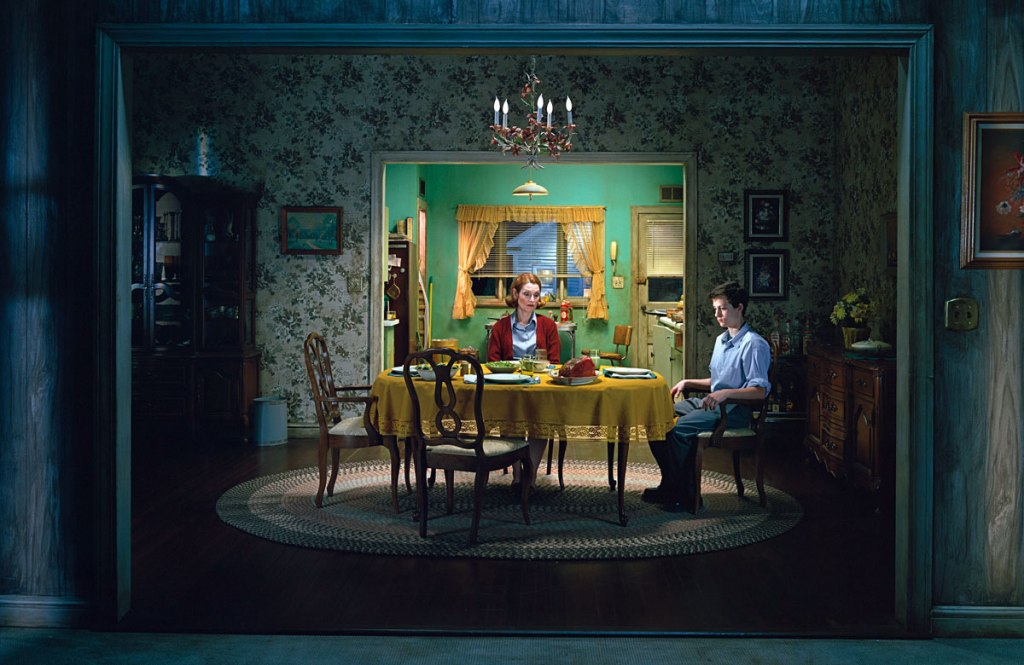
Gregory Crewdson年輕時組過樂隊The Speedies,成名曲《Let Me Take Your Photo》後來成為HP數碼相機廣告歌,而歌曲名字似乎也預見了他未來的生涯。1980年代中開始學習攝影,在耶魯大學獲得藝術學位,現在是耶魯大學藝術學院教授。從事藝術教育關係,他對藝術史瞭如指掌,無形中也找到了自己的創作方向。坦言受攝影師Diane Arbus、Robert Frank、Walker Evans及畫家Edward Hopper等人影響,Gregory Crewdson的作品裡也流露出前人們對美國夢的探索,熱衷於Alfred Hitchcock、David Lynch與Steven Spielberg等大導的電影,也讓他的攝影作品電影感十足,充滿詭異及荒涼的美學。相比電影,他說靜態影像更讓自己著迷,因為其敘事空間停留在特定時刻,不能像電影般對畫面有所鋪墊與延伸,但正是這種局限,吸引他更專注創造出充滿戲劇性的影像。
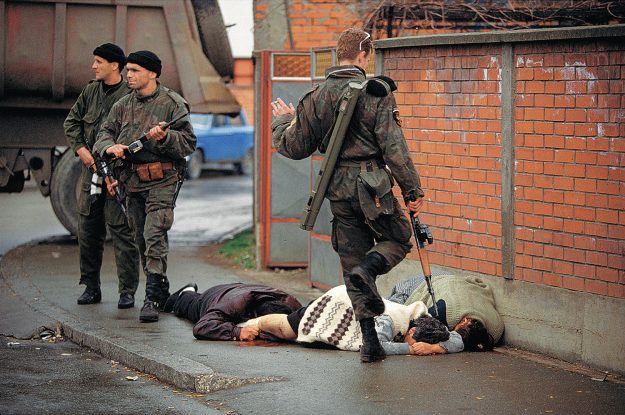
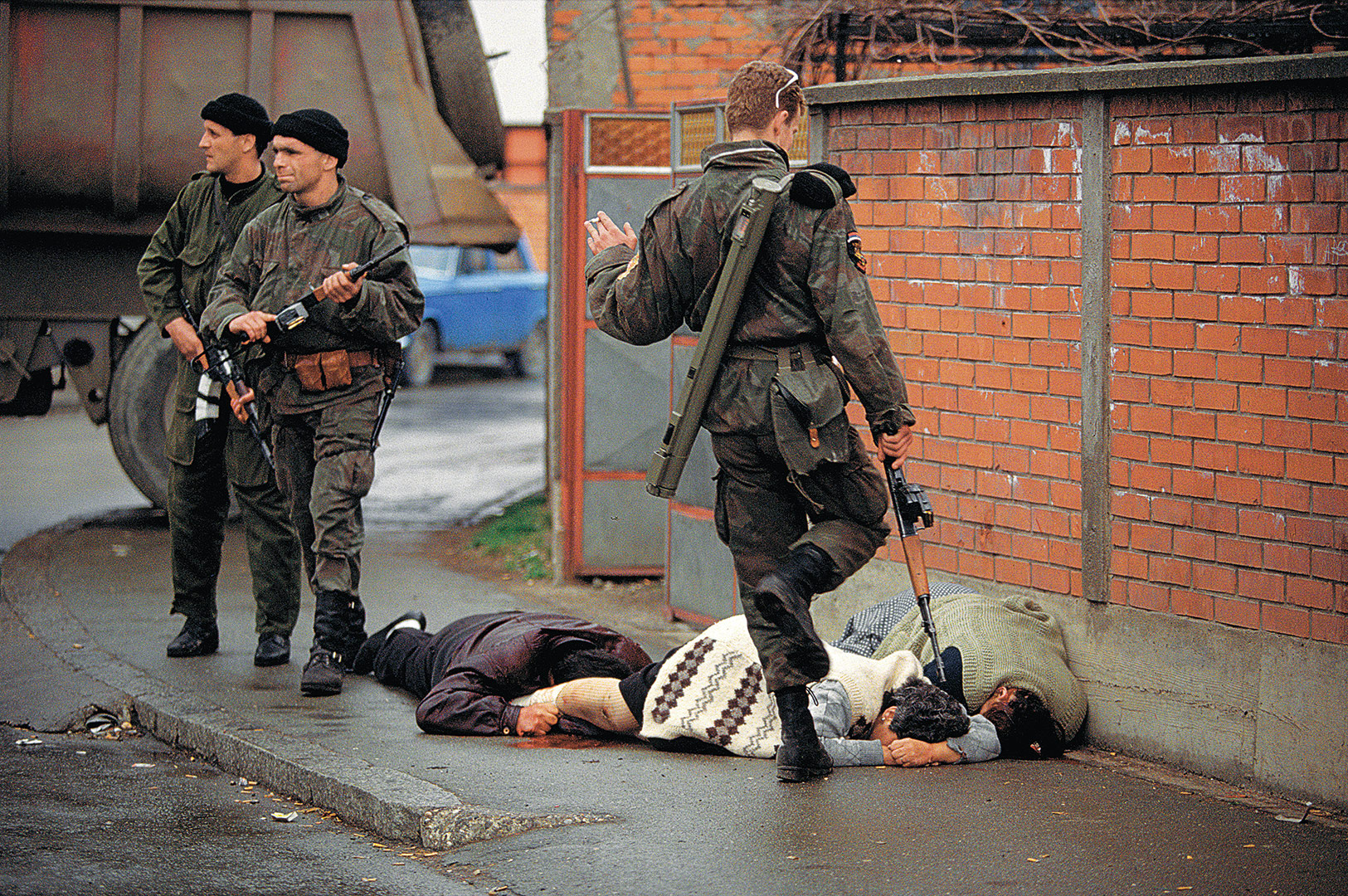
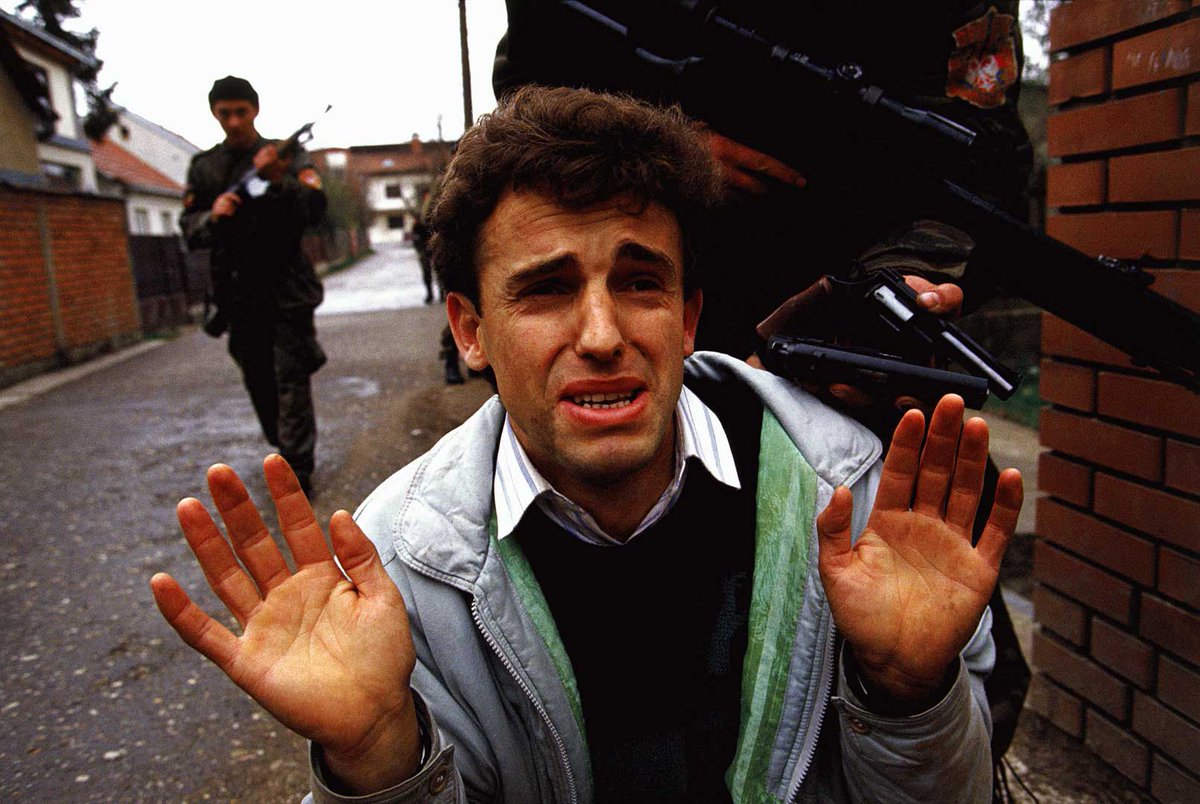
相信許多人都聽過鄭秀文的《薩拉熱窩的羅密歐與茱麗葉》這首歌,故事講述一對年輕戀人想逃離戰火中的薩拉熱窩,最後被軍隊殺死的真實故事。發生於1992年至1995年的波黑戰爭(Bosnian War)造成逾十萬人死亡,1993年由美國記者Mark H. Milstein拍攝的《薩拉熱窩的羅密歐與茱麗葉》,由於被製作成紀錄片及改編成流行曲,固然廣為人知。另一張非常著名的照片,則由美國攝影師Ron Haviv在1992年3月31日拍攝,他現時正身處烏克蘭拍攝由俄羅斯入侵所引起的戰爭。
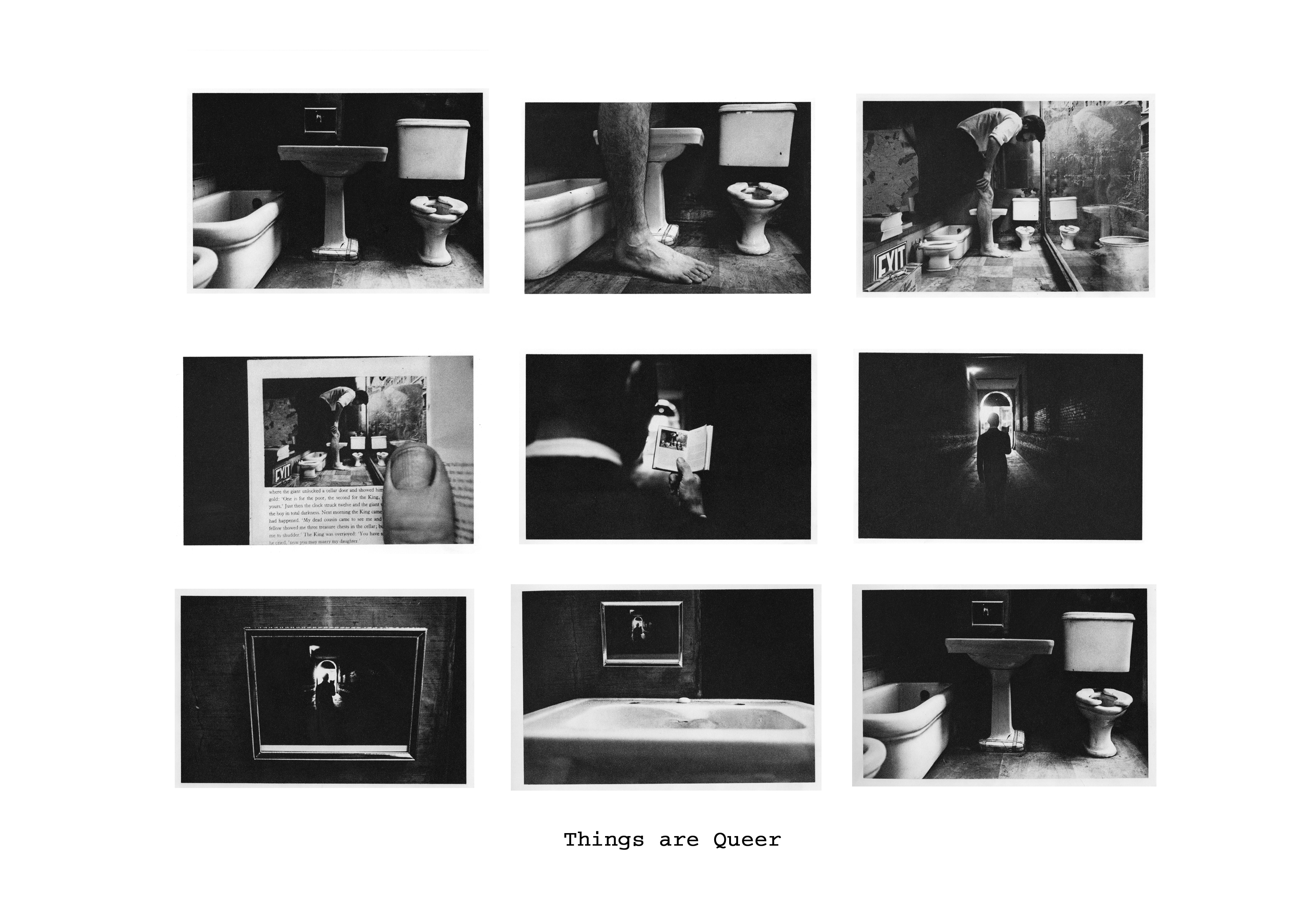
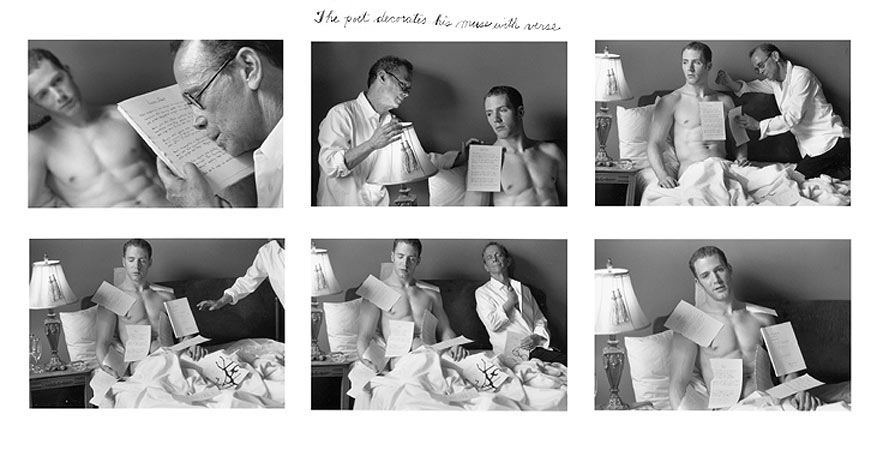
Duane最為人熟悉的創舉有兩個,第一是連續式(或系列式)攝影,經常利用多幅照片來呈現一個主題,連續的照片之間帶有敘事性,感覺有如看一部迷你的靜態電影。他比喻自己是一個短篇小說的講故佬,最出名的作品當屬1973年拍攝的《Things are Queer》,首先他拍攝一張廁所的照片,但原來這張照片只是書上的一頁插圖,又原來有個男人正在閱讀這本書,最後發現男人書籍上的照片正是原先廁所照片裡的影像。這系列作品充滿哲學意味,在《Grandpa goes to heaven》這系列作品裡則思考生死問題,Duane影響許多人對攝影的觀感。攝影不只是記錄,也可引發人思考。
2022年是香港回歸25周年,也是邱良逝世25周年。藝文平台「文化者 The Culturist」及攝影平台「顯影 PhotogStory」共同策劃邱良紀念展《百變香江》(City Vibrance: Hong Kong),展出多張邱良於1960至70年代拍攝、以及由攝影家親手放曬的珍貴銀鹽原作照片,相片也呈現當時港人的樸素日常以及生活的閒情逸致,是難得的集體回憶。