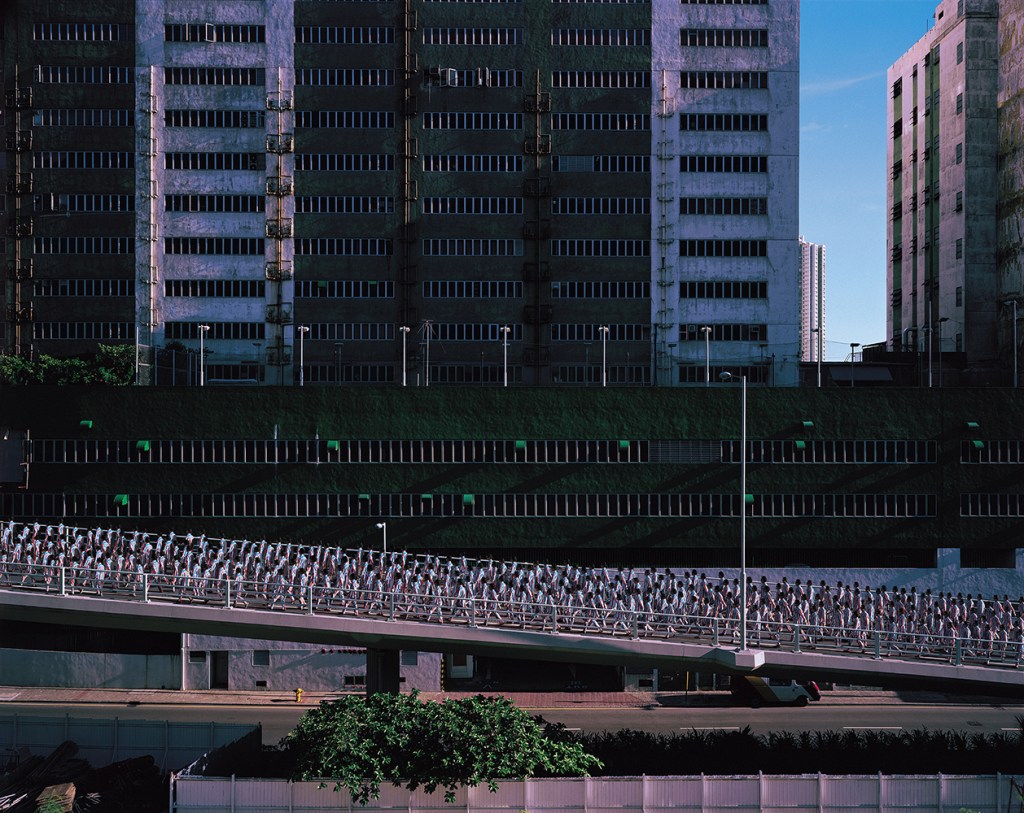
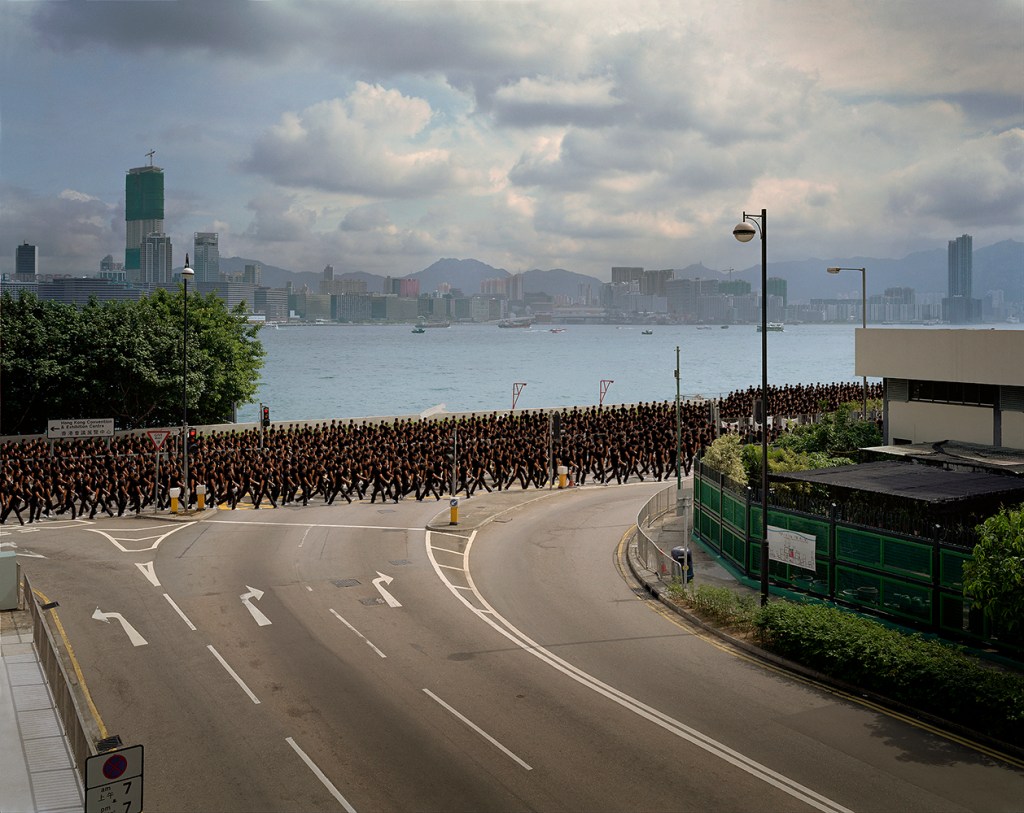
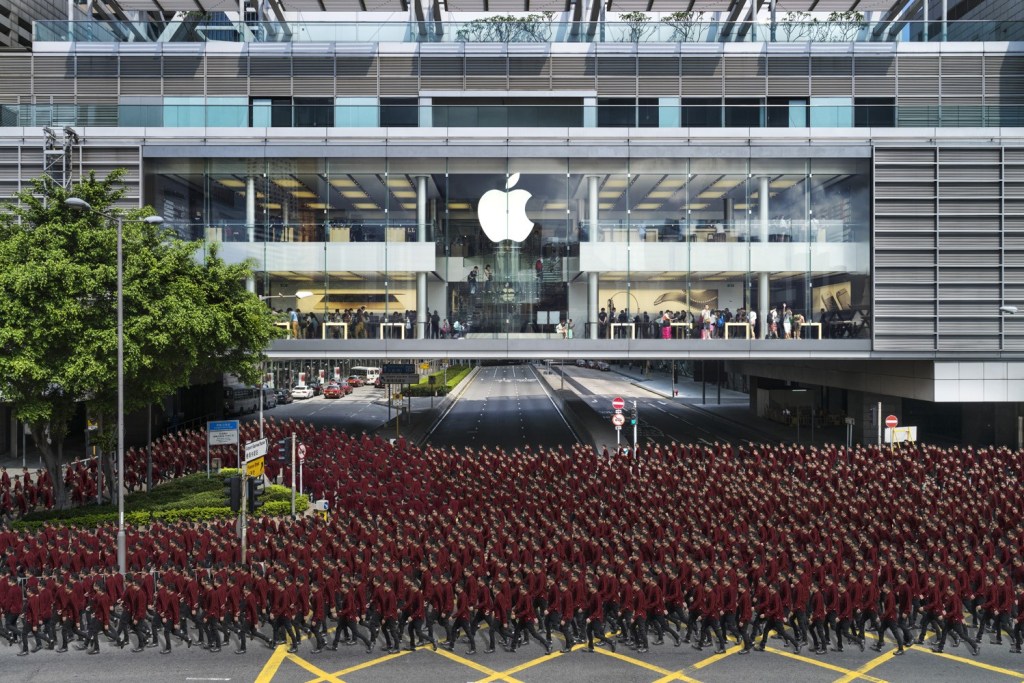
Almond Chu explores social issues with the “parade” series.
Hong Kong had long been known as the “Parade City” even before last year’s extradition bill demonstration. It has been 23 years after the Hong Kong handover, and people are familiar with protests. On July 1st, 2003, half a million people took to the streets against Hong Kong Basic Law Article 23. Photographer Almond Chu also participated in that year, inspiring him to create the “Parade” series in the following year.
“In 2004, I completed the Artist Residency in Germany. After returning to Hong Kong, I wanted to abandon the shooting technique of portraits and still life in the studio, and began to move forward.” On the one hand, he created the “ARTIFICIAL LANDSCAPE” in landfills and reservoir flooded with garbage, to reflect on the damage caused by humans.
As for the “Parade” series, he selected the iconic buildings of the colonial period, such as the old Star Ferry Pier and the Central Police Station, and related the location with the characters. Most people may not have much memory of the third work near the Wan Chai Pier, “During the 2005 World Trade Conference, Korean farmers once demonstrated and jumped in the sea in this area.”
The “Parade” series was not only created in Hong Kong but also inspired by buildings in Beijing and Guangzhou. “Because of a conversation with the painter Wucius Wong, I was considering the issue of “identity,” so I step into the mainland for inspirations.”
Under the red walls of the Forbidden City in Beijing, numerous security officers wearing sunglasses and green uniforms, which is very iconic among the Parade series. Starting from the fourth work, he tried to interpret the characters in the photos by himself, so that the work has a strong message.
In 2015, he created “Parade 15 (79)” in response to the 2014 Umbrella Movement, in front of the Central Government Complex, 79 people holding yellow umbrellas. The last piece, “Parade 16 (The Apple)”, focuses on the Apple flagship store in Central, reflecting on the fact that when computers and smartphones dominate our lives, does technology ensure people with a better connection?
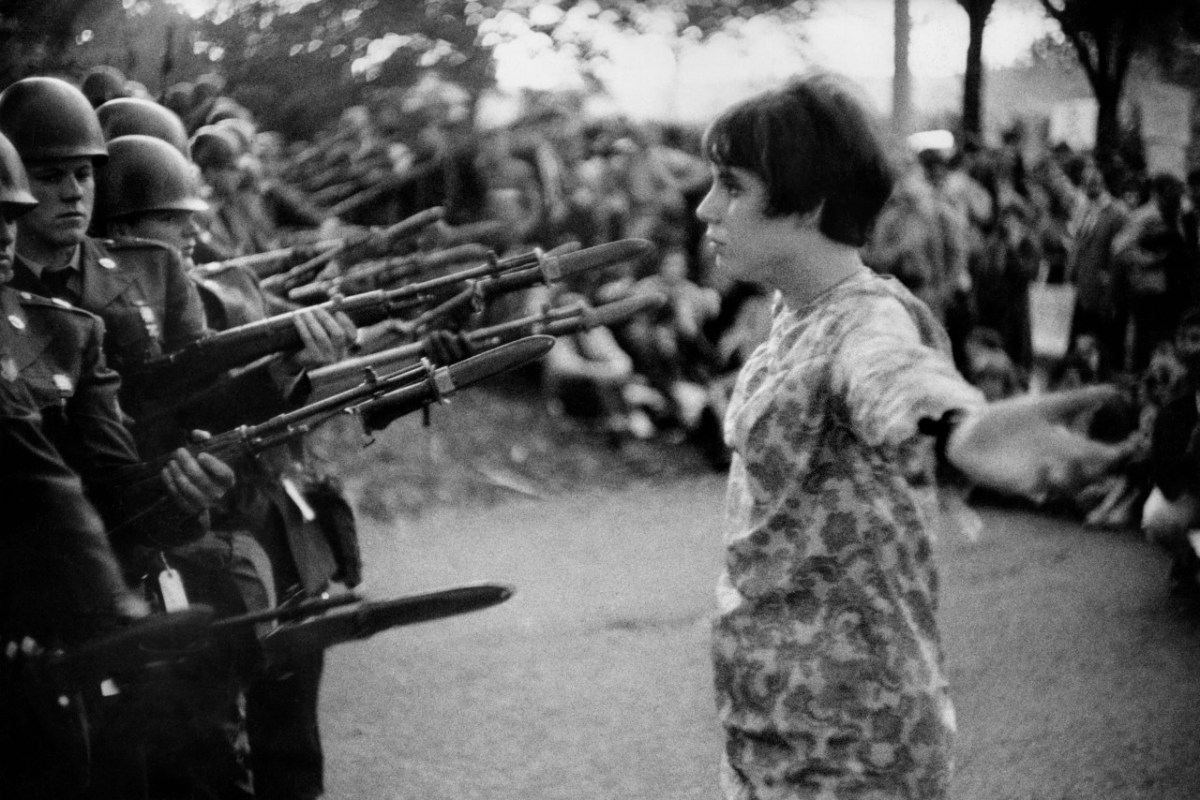
1967年10月21日,近十萬人遊行至美國首都華盛頓的五角大樓,抗議美國介入當時的越南戰爭,Magnum攝影師Marc Riboud拍攝了整個遊行過程,最後一格菲林拍攝的畫面也是最著名的一張,一位名為Jan Rose Kasmir的17歲高中女生手握鮮花,站在阻擋示威者的士兵前面。其實當時Jan並不知道這畫面被Marc Riboud拍攝下來,但鮮花與刺刀對立的畫面,卻成為反戰的象徵。
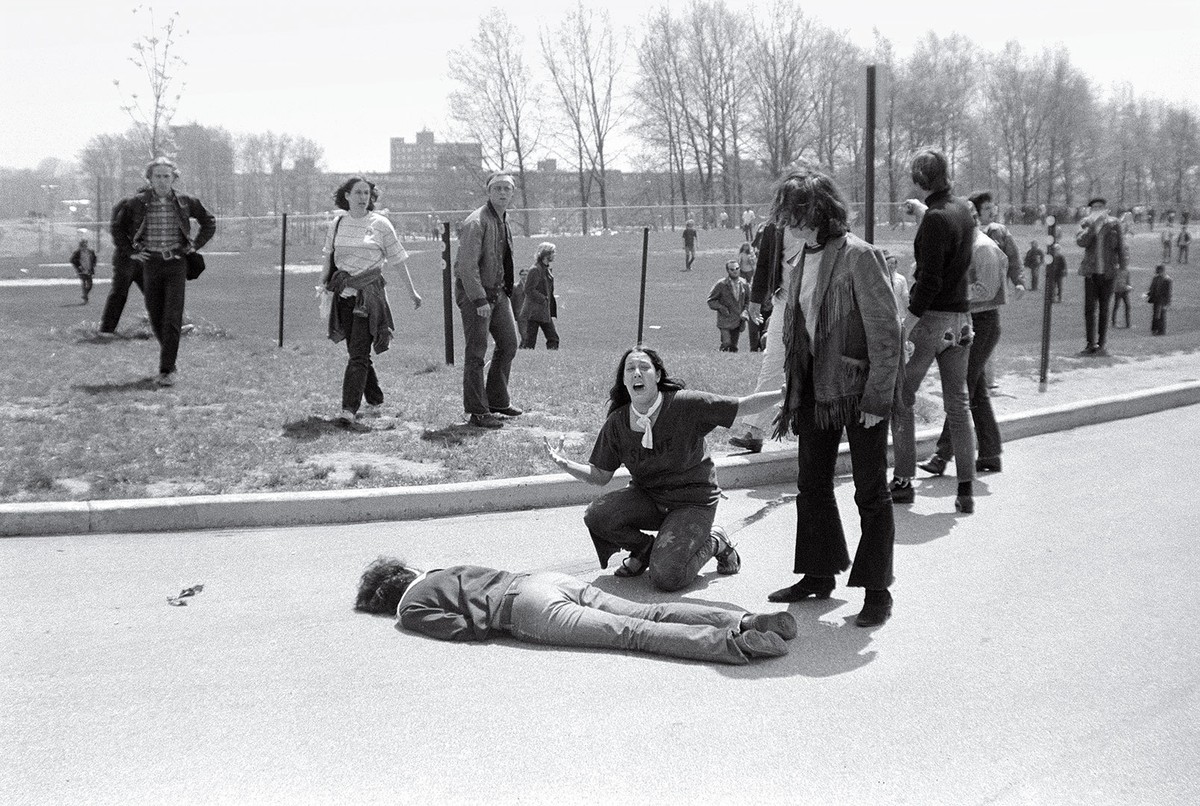
<Kent State Shootings> by John Filo
Marc Riboud那張「鮮花與刺刀」照片成為經典,另一張由美國攝影師John Filo拍攝的反越戰照片<Kent State Shootings>,背後卻是個悲傷故事。1970年4月尾,尼克遜總統宣佈擴大越南戰爭,進軍越南鄰國柬埔寨,消息引來全國多個城市的抗議活動,包括俄亥俄州肯特市,可惜最終釀成肯特州立大學槍擊事件(Kent State shootings)。
突然間,警衛隊士兵忽然一齊開槍,有的朝天開槍,有的則瞄準了學生,在短短13秒時間內發射出近70發子彈,造成四名學生死亡、九名學生受傷。身為學生的一分子,John Filo同時也是一名兼職的新聞攝影師,當時他正在學校的攝影室裏,聽到槍聲後馬上衝出去拍照,當他跑過去距離開槍不遠的地方時,見到一位15歲少女Mary Ann Vecchio跪在中槍學生面前大聲痛哭,迅速地拍攝下來,照片刊登在《New York Times》封面,也為他贏得普立茲新聞獎(Pulitzer Prize)。
抗爭歌手Neil Young知道這個故事後,隨即創作了歌曲<Ohio>,歌詞是這樣寫的:Tin soldiers and Nixon coming/ We’re finally on our own/ This summer I hear the drumming/ Four dead in Ohio。
<Bosnian War> by Ron Haviv
相信許多人都聽過鄭秀文的《薩拉熱窩的羅密歐與茱麗葉》這首歌,故事講述一對年輕戀人想逃離戰爭中的Sarajevo,最後被軍隊殺死的真實故事。發生於1992年至1995年的波黑戰爭(Bosnian War)造成逾十萬人死亡,1993年由美國記者Mark H. Milstein拍攝的「Romeo and Juliet in Sarajevo」,由於被製作成紀錄片及改編成流行曲,固然廣為人知。另一張非常著名的照片由美國攝影師Ron Haviv在1992年3月31日拍攝。