在佛教用語中,此岸 (This Shore) 是眾生居住的娑婆之地,彼岸 (The Other Shore) 則是理想的彼方世界。放諸攝影裏,此岸可指我們身處的真實世界,而彼岸則是超越當下現實的境界,是一種精神上的追求與探索。
三位香港藝術家的作品,不論是鍾寶倫的紅外線攝影、王禾璧的AI生成圖片,還是田禮文以高斯潑濺 (Gaussian Splatting)創作的圖像,三者皆跨越現實的邊界,到達影像上的「彼岸」世界。
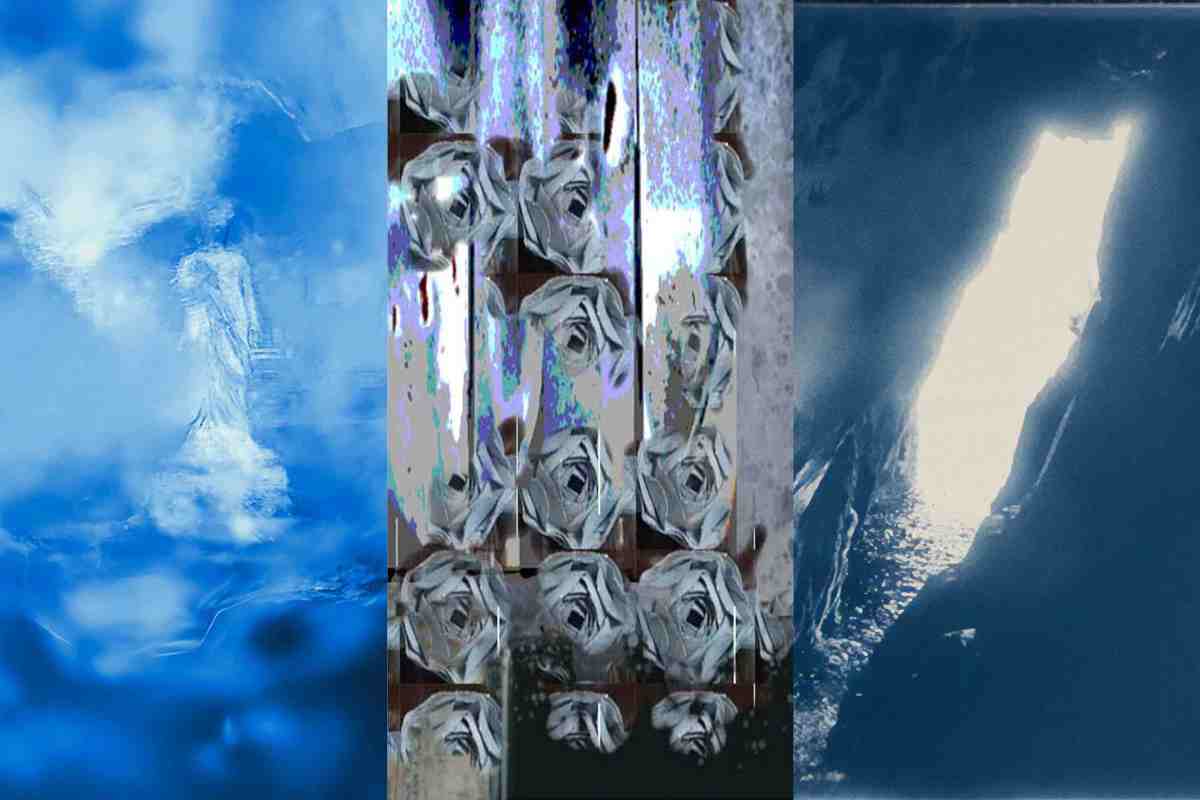
彼岸是甚麼顏色?在三位藝術家作品中,「彼岸」無疑是藍色的——那是深邃而靜謐的藍曬之色調。藍曬 (Cyanotype)作為一種古老的印相技術,影像呈現典雅而迷人。來到21世紀,古典工藝也演變出別樣的呈現方式,從鍾寶倫的玻璃藍曬、田禮文的數碼藍曬效果,到王禾璧以藍曬花卉所構成的雕塑裝置,藍曬成為一種影像的煉金術,將生命經驗、自然、AI圖像融為一種冥想。
藝術家們的作品也與佛教有無形連結。此岸是煩惱與苦海的世界,彼岸則是解脫後的極樂之地,鍾寶倫幻想父親彌留之際所見到的畫面,是滿天的花朶、霧中的身影,抑或是猛烈陽光下的佛像?他以紅外線相機捕捉生死之臨界,以透明玻璃承載不可見的光譜,彷若靈魂的影像,似在揭示生命在臨界時刻的模糊景象——霧、光、花與熱能化為彼岸的徵兆。
王禾璧的作品靈感源自胡金銓導演的《空山靈雨》,這是一部結合武俠與佛教的電影。藝術家延續對經典電影的探索,將電影中對自然世界的敬畏轉化為一首沉浸式的頌歌。她將藍曬影像摺疊成花卉,結合AI生成的電影畫面及短片,構建出一個結合視覺、聽覺、工藝和科技交織的多感官環境。
田禮文的作品重新呈現香港最高峰大帽山,以及坐落於其郊野公園山區的凌雲寺菩薩聖像之形貌,探究形相在因緣條件下的生滅流轉。每一次的重構,皆是一場關於無常、緣起與轉化的觀照。
《彼岸之藍》以「藍曬」為影像與感官的橋樑,貫穿「此岸」與「彼岸」的哲學隱喻。三位藝術家的創作透過不同科技手段重構彼岸世界,使影像從物象轉為精神象徵,構建出一種使觀者彷彿置身異境的視覺體驗。
日文名稱:彼岸の青 (Higan no Ao)
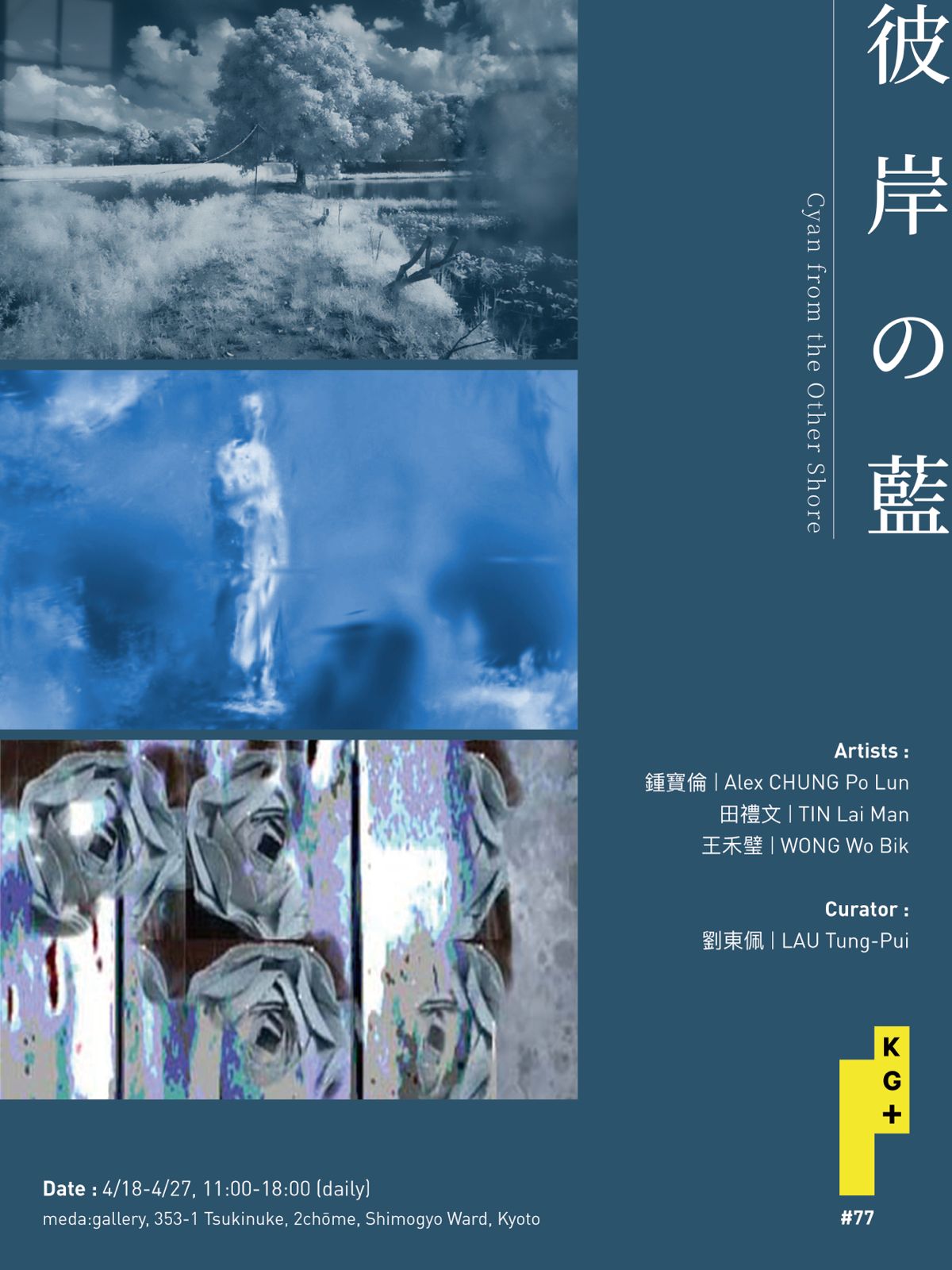
Cyan from the Other Shore
Artists: 鍾寶倫|Alex CHUNG Po Lun, 田禮文|TIN Lai Man, 王禾璧|WONG Wo Bik
Curator: 劉東佩 |LAU Tung-Pui
Date: 4/18-4/27, 11:00-18:00 (daily)
Venue: meda: gallery, 353-1 Tsukinuke, 2chōme, Shimogyo Ward, Kyoto
〒600-8364 京都府京都市下京区突抜二丁目353-1
Cyan from the Other Shore
In Buddhist teachings, This Shore refers to the Sahā world—the realm of sentient beings where suffering and desire reside. The Other Shore, by contrast, symbolizes an ideal realm beyond, a state of spiritual liberation and enlightenment. Within the realm of photography, This Shore may be seen as the tangible world we live in, while The Other Shore becomes a metaphor for transcendence—an inner pursuit of vision and spirit through the image.
In the works of three Hong Kong artists—Alex Chung, WONG Wo Bik, and Man Tin—image becomes a vessel that voyages across the boundaries of reality. Whether through Chung’s infrared photography, WONG’s AI-generated images, or Man Tin’s visuals using Gaussian Splatting, each artist traverses the threshold between the visible and the unseen, arriving at their own Other Shore of the image.
Then, what color is The Other Shore? In the works of these artists, it is, without doubt, blue—the deep, tranquil hue of cyanotype. As an early photographic printing process, cyanotype exudes a classical, contemplative elegance. In the twenty-first century, this technique has been renewed through diverse contemporary expressions—from Alex Chung’s cyanotypes on glass plate and Man Tin’s simulated digital cyanotypes to WONG Wo Bik’s cyanotype-flower sculptures. Cyanotype here becomes an alchemy of the image—fusing lived experience, nature, and visual illusion into an act of meditation.
Each artist’s work resonates with Buddhist thought in invisible ways. This Shore is the world of delusion and distress; The Other Shore is the realm of liberation beyond. Alex Chung imagines what his father might have seen at the threshold of life and death—fields of flowers, spectral silhouettes in mist, or perhaps the blazing radiance of a Buddha. With an infrared camera, he captures that liminal moment, using transparent glass to bear the invisible spectrum of light—images of the soul itself, revealing the ambiguity between being and dissolution. Mist, light, blossoms, and heat shimmer as omens of the Other Shore.
WONG Wo Bik’s work draws inspiration from King Hu’s film Raining in the Mountain—a cinematic meditation that unites Buddhist philosophy with martial-arts elements. Extending her engagement with classical cinema, she translates the film’s reverence for nature into an immersive visual hymn. Folding cyanotype images into floral forms and intertwining them with AI-generated imagery and moving images, she composes a multisensory environment where vision, sound, craft, and technology converge.
Man Tin’s work re-envisions Hong Kong’s highest peak—Tai Mo Shan—and the Bodhisattva statue at the Ling Wan Monastery in Kwun Yam Shan in the nearby area. Through digital reconstruction, he reflects upon the arising and passing away of form under causation. The visuals become a meditation on impermanence, dependent origination, and transformation.
This exhibition adopts cyanotype as both a medium and a metaphor—a luminous bridge between This Shore and The Other Shore. Through varied technological vocabularies, the artists reconstruct worlds beyond, transforming the image from material representation into a spiritual symbol, and their works invite viewers into a contemplative space.
Discover more from 顯影-PhotogStory
Subscribe to get the latest posts sent to your email.

